











 MIRAI TOKYO concierge team
If you are sharing a Tokyo business hotel with colleagues or family, calling a companion to your room may not be an option you are willing to take—and many premium outcall operators are built for luxury city hotels, not every private scenario. Love hotels (ラブホテル) are a legitimate, common part of Japan’s urban landscape: private-entry facilities designed for discreet stays, often booked by the hour or overnight without the social exposure of a mainstream hotel lobby. They work differently from a Hyatt or Hilton—panel room selection, automated payment, rest-versus-stay pricing, and sometimes passport checks for foreign guests. This guide walks through how to use a love hotel in Tokyo step by step, what to expect at entry and exit, how love hotels relate to outcall and deriheru terminology, and when a love-hotel-based evening may be more practical than insisting on a shared business room—plus where to choose an area (see the linked district hub).
Table of Contents
- Why Foreign Guests Consider Love Hotels
- Love Hotels vs. City Business Hotels
- Step-by-Step: Check-In Flow
- Panel Selection & Room Types
- Auto-Pay Machines & Pricing Modes
- Passport & ID Checks
- How This Relates to Outcall & Deriheru
- Entry, Exit & Discretion Tips
- Common Mistakes at Love Hotels
- Choosing an Area First
- FAQ
Why Foreign Guests Consider Love Hotels
Common situations:
- Shared business room: Colleague on the other bed, or family trip—inviting a companion to the room is not realistic.
- Discretion priority: Love hotels are designed for low-visibility entry (parking-garage elevators, separate entrances, minimal lobby interaction).
- Short-window stays: Rest (休憩) rates for a few hours without paying a full business-hotel night.
- Local-format curiosity: Understanding Japan’s love-hotel culture before dismissing it as “not for me.”
Real guest scenarios
- Post-dinner window: Business dinner ends at 22:30; you need a private room until 01:00 but cannot use your shared twin room.
- Conference hotel policy: The group hotel discourages non-registered visitors; a love-hotel rest block avoids front-desk scrutiny.
- Transit layover: A few hours near a major hub—Ikebukuro or Shinjuku—without committing to a full business-hotel night rate.
Love hotels are not illegal gray zones—they are licensed accommodation businesses with a specific cultural role. They are also not the same product as luxury hotel outcall, which targets city-hotel delivery. Many guests use love hotels as the location while arranging companionship separately; terminology in the deriheru world often uses “hotel” to mean love hotel in storefront formats (see Deriheru vs. Fashion Health vs. Hotel Health).
Love Hotels vs. City Business Hotels
| Factor | Love hotel | City / business hotel |
|---|---|---|
| Entry style | Often garage or side entrance; minimal front-desk theatre | Main lobby, front desk, sometimes companion policies |
| Room choice | Panel / touchscreen selection of available rooms | Pre-assigned room category at booking |
| Billing | Frequently automated payment machine on exit (or entry) | Front-desk settlement, card on file |
| Typical use | Rest blocks or overnight privacy | Multi-night business or tourism stays |
| Premium outcall fit | Varies—MIRAI TOKYO is designed for luxury city hotels; love hotels are a separate use case | Core corridor for hotel-based premium outcall |
For premium dispatch to a luxury city hotel room, see Deriheru vs. Hotel Premium Outcall and How to Book Premium In-Room Service at Your Tokyo Hotel.
Step-by-Step: Check-In Flow
-
1. Arrive at the facility
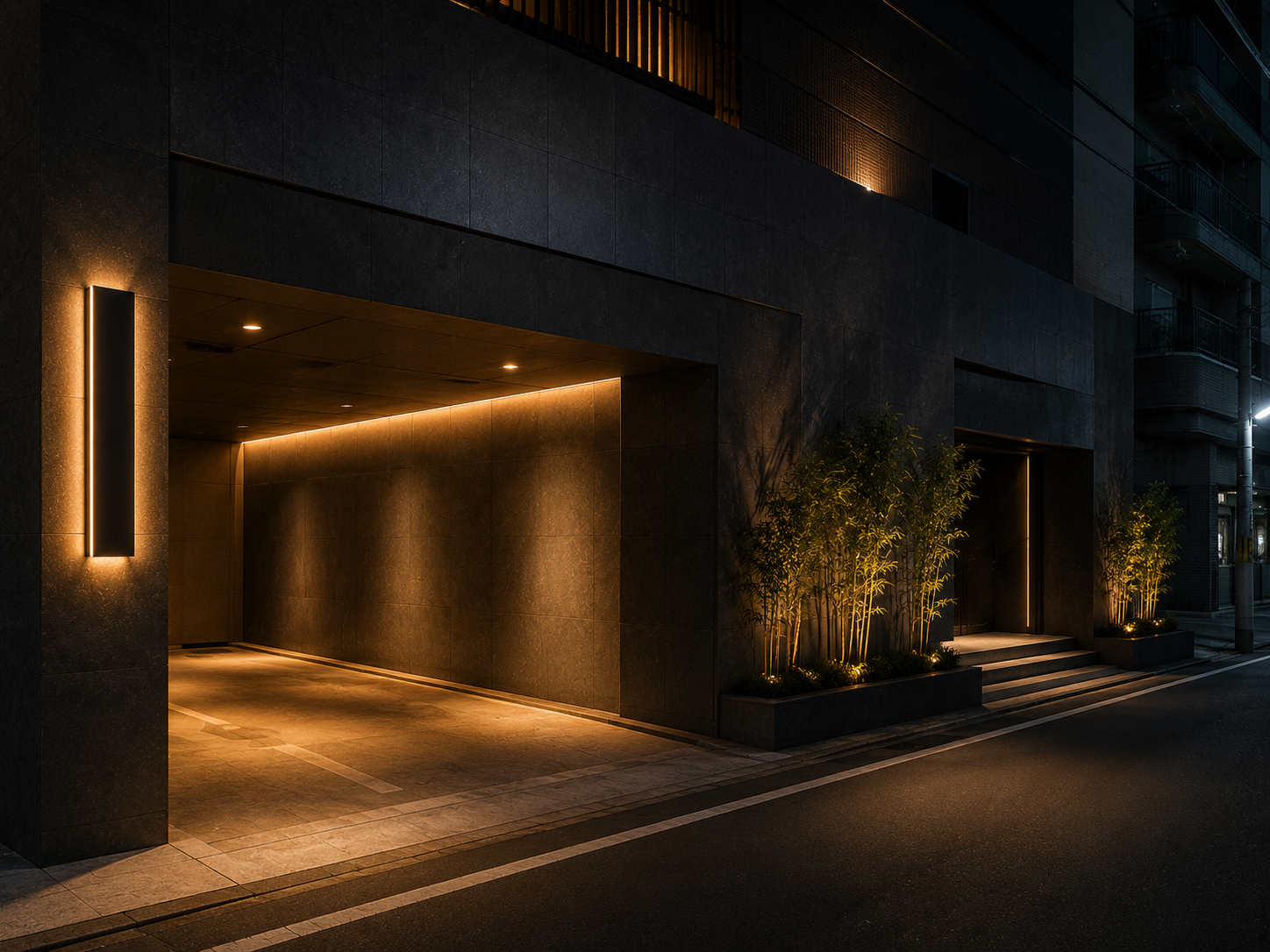
Many love hotels use a parking-garage entrance or a discrete side door rather than a grand lobby. Follow signage for 入室 (entry) or vacant rooms.
-
2. Select a room from the panel
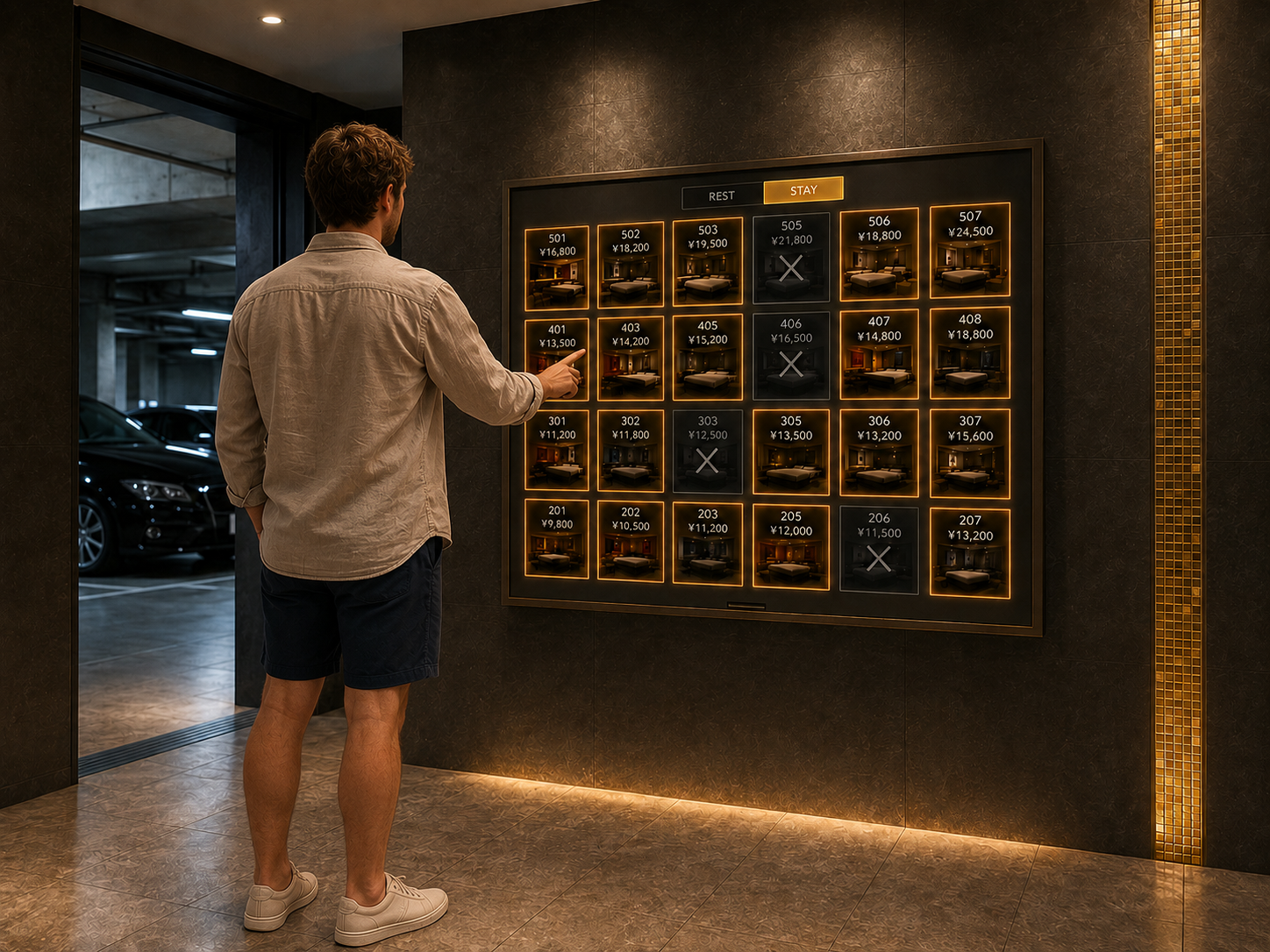
An entrance-lobby panel or touchscreen shows available room types with photos, amenities, and current rest/stay rates. Vacant rooms are highlighted; occupied rooms are greyed out.
-
3. Enter the room
After selection, the system directs you to a room number. Doors often open automatically or via a displayed code.
-
4. Use the room
Amenities vary by tier—karaoke, jacuzzi, themed décor at higher-end properties. Rest clock starts based on the mode you chose.
-
5. Pay on exit (or at machine)
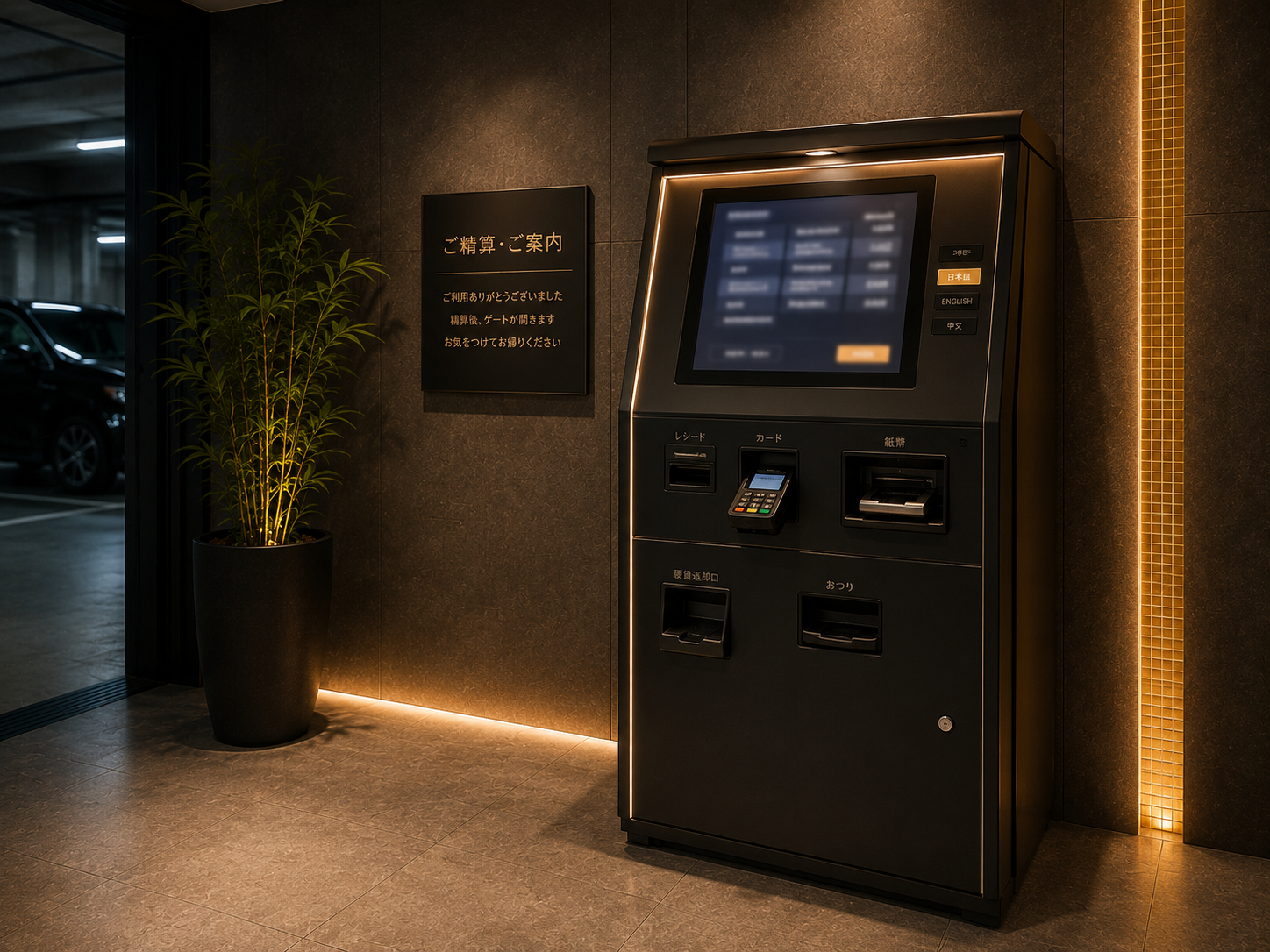
Many facilities use an automated payment terminal: insert room key or enter room number, confirm rest/stay charges, pay cash or card per machine capability.
-
6. Leave via exit route
Separate 退室 (exit) paths reduce cross-traffic with arriving guests.
Panel Selection & Room Types
Panels display photos, floor size, bath type (jet bath, sauna), and theme. Prices update by time band—late night, weekend, and event nights may surge. Read the rest (休憩) versus stay (宿泊) indicator before tapping confirm.
Rest vs. stay
- Rest (休憩): Short block—commonly 2–3 hours, sometimes extendable. Designed for brief use.
- Stay (宿泊): Overnight-style block, often with better per-hour value if you need until morning.
Reading the panel before you tap
Panels usually show: room photo, floor size, bath equipment, current vacancy, and two price columns (rest / stay). Occupied rooms are greyed out. If every tier is full, you either wait, pick another district, or try a simpler room category—there is no front-desk negotiation in the Western hotel sense.
Auto-Pay Machines & Pricing Modes
Automated payment machines (精算機, seisanki) are standard at mid- and large-format love hotels. You typically confirm room number, see itemized rest/stay time, and pay. Cash remains common; card acceptance varies—check the machine or property signage before you assume card-only.
Extension while inside: many rooms have a phone or tablet to request 延長 (extension); charges stack to the final machine total. Missing the rest deadline can flip you into a higher stay band—watch the in-room timer.
Weekend and late-night surcharges
Many properties raise rest or stay rates on Friday–Saturday nights and after midnight. The panel shows the current band—there is no separate “foreigner price.” If the total looks high, compare a simpler room tier on the same panel before you leave the district.
Passport & ID Checks
Foreign guests may be asked for passport or ID, especially at properties that register overnight stays under lodging regulations. This is not universal at every love hotel, but carry ID the same as at any Japanese accommodation. If language is a barrier, showing passport plus a translation app is usually sufficient; staff at busier districts see international guests regularly.
What to have ready
Passport or residence card, payment method the machine accepts (cash is the safest default), and a charged phone for translation. Some staffed properties may ask your name for the lodging register—romanized passport name is enough.
How This Relates to Outcall & Deriheru
In Japanese industry language, “hotel” inside “hotel health” refers to love-hotel districts, not the Ritz-Carlton. Premium hotel outcall—the segment MIRAI TOKYO operates in—is built for luxury city hotels in Minato and adjacent wards. Love hotels solve a location privacy problem; premium outcall solves a service-at-your-city-hotel problem. They overlap only when a guest deliberately chooses a love-hotel room as the meet-up address and an operator agrees to dispatch there—policies vary widely; MIRAI TOKYO’s primary model is luxury city-hotel delivery.
Privacy practices at city hotels: Discreet Outcall in Tokyo Hotels.

Deriheru vs. Fashion Health vs. Hotel Health in Tokyo: Three Formats Foreign Guests Mix Up | MIRAI TOKYO Roppongi | Luxury Escort Club in Tokyo
Deriheru, fashion health, hotel health: three Tokyo adult-service formats that look alike but work very differently. History, legal frames, pricing, and foreign-visitor fit explained.
Entry, Exit & Discretion Tips
- Prefer facilities with garage or side entry if lobby visibility matters.
- Travel light—large luggage in a love-hotel room is awkward and unusual.
- Confirm whether the property allows two visitors if you are meeting someone; policies differ.
- Keep the rest timer visible—overtime charges are automatic, not negotiable at the machine.
- First-time Tokyo visitors: read Your First Tokyo Outcall for general booking discipline even if your location choice differs.
Common Mistakes at Love Hotels
Choosing stay mode when you only need rest
Stay bands cost more because they assume morning exit. If your window is two to three hours, rest mode is the correct column—do not tap stay because it “sounds more legitimate.”
Ignoring the in-room timer
Extensions are possible at many properties, but passive overtime triggers automatic tier jumps. Set a phone alarm five to ten minutes before the posted rest end.
Assuming any outcall operator will come to the address
Love-hotel rooms are not automatically valid dispatch points for premium city-hotel outcall services. Confirm operator policy in writing before you book companionship to a love-hotel room number.
Skipping the district hub
Facility hunting without geography wastes time. Pick a district first—Best Love Hotel Districts in Tokyo—then apply this how-to on site.
Choosing an Area First
Love hotels cluster by district—Ikebukuro, Shinjuku, Shibuya, Gotanda, Yushima, and others each have a different vibe, access line, and price band. Once you know where, this how-to guide covers how.
→ District hub: Best Love Hotel Districts in Tokyo: Ikebukuro, Shinjuku, Shibuya, Gotanda & Yushima
→ District hub: Best Love Hotel Districts in Tokyo: Ikebukuro, Shinjuku, Shibuya, Gotanda & Yushima
FAQ
Pick a District, Then Use the Flow
Start with the Tokyo love-hotel district guide to choose an area, then follow the panel-and-payment steps in this article. For luxury city-hotel outcall, see MIRAI TOKYO’s booking flow separately.
Last Updated: 2026-06-26
This content is for informational purposes only. Love-hotel policies, rates, and ID requirements vary by property. Outcall dispatch to love-hotel addresses is operator-specific—always confirm in writing.