










 MIRAI TOKYO concierge team
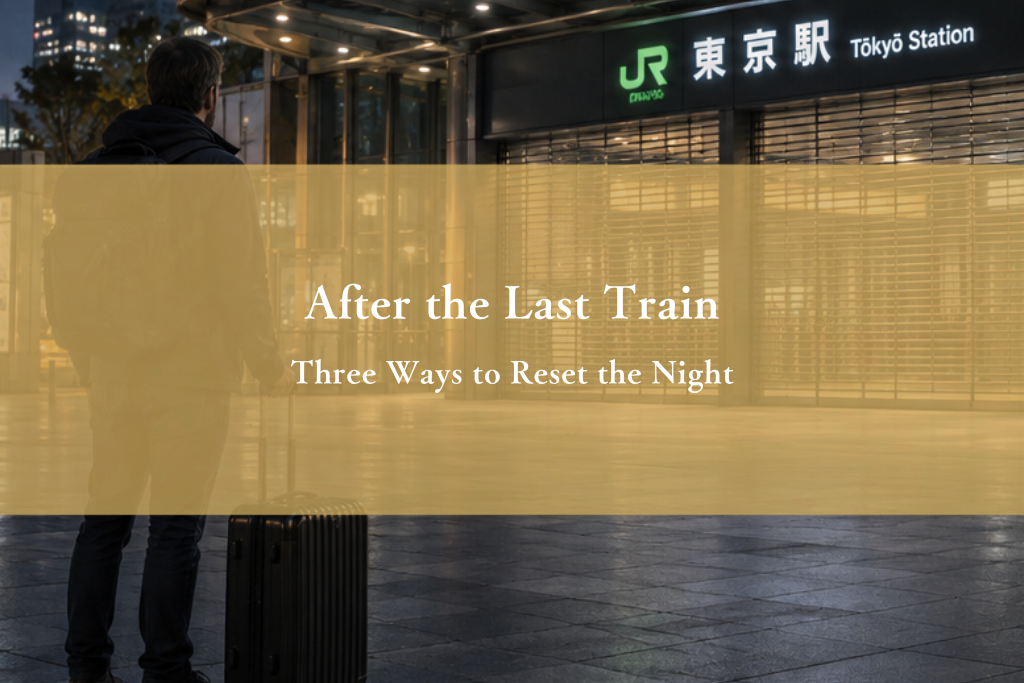
Missing the last train in Tokyo changes the shape of the night very quickly. A route that looked simple at 11:30 p.m. can become a taxi decision, a long wait for the first train, or a reason to return to your hotel and stop treating the night as a sightseeing problem. If you are alone, the useful question is not simply “what stays open?” It is “where do I want to spend the next few hours, and what is realistically available from that location?”
After the trains stop, think in three directions: get back to your hotel, stay where you are until morning, or return to a private base and change the kind of night you are having. MIRAI TOKYO can overlap with these late-night hours because its published business hours run until 6:00 a.m., but same-night availability is never something to assume.
What actually changes after the last train
Tokyo is famous for moving efficiently, but that efficiency is built around a rail network that does not run all night. Exact last-train and first-train times vary by line and station, so they should always be checked for the route you actually need. In broad terms, however, there is often a several-hour gap between the final trains around midnight and the first services in the early morning.
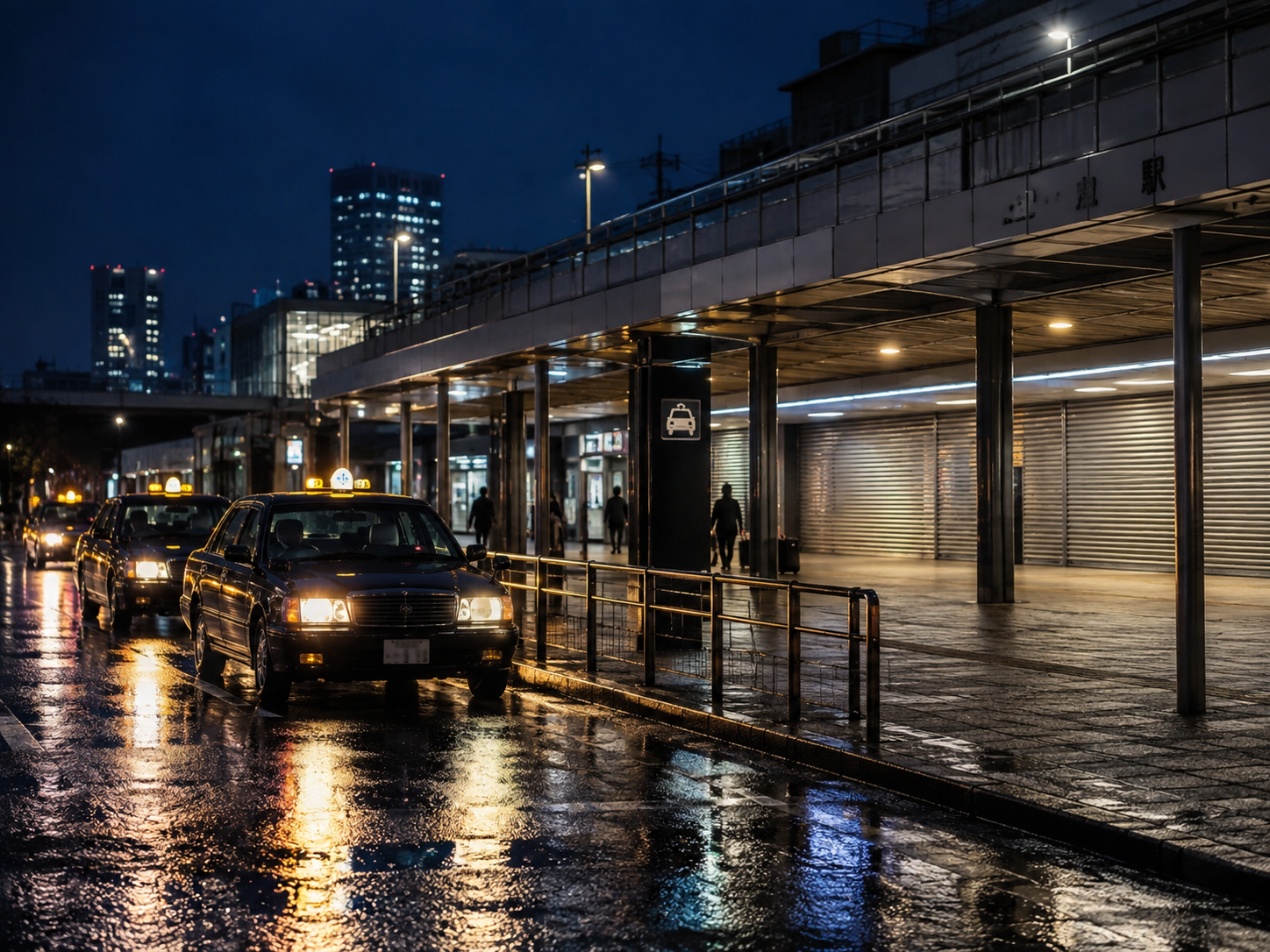
That gap matters because the city does not become inaccessible; it becomes more expensive and more local. A destination that was twenty minutes away by rail may now require a taxi. A plan to “just move to another neighborhood” has a different cost. Walking may be technically possible but unattractive once distance, weather, luggage, alcohol, fatigue, or unfamiliar streets enter the picture.
This is why an after-last-train decision should begin with location rather than entertainment. Ask where your hotel is, how far you are from it, whether you actually need to move again, and how much energy you want to spend on the remaining hours. The best late-night decision at 1:00 a.m. is often different from the plan you would have chosen at 9:00 p.m.
Three situations to identify first
Once rail service is no longer the default, a useful way to sort the night is to identify which of three practical situations applies to you. This avoids treating every “late-night Tokyo” option as equally convenient from every location.
You still need to get back to your hotel
If your room, luggage, passport, or next morning’s schedule is elsewhere, getting back may be the only decision that matters. A taxi can be the simplest answer, but the relevant question is the actual distance to your hotel rather than the popularity of the district where you are standing. If the trip is long, compare the cost and time against waiting locally for rail service to resume.
You are comfortable staying in the area until morning
If you do not need to move, the problem becomes easier. You can limit yourself to places that are already nearby instead of creating another cross-city journey. This is the point at which ordinary late-night food, entertainment, or simply waiting for morning may be enough. There is no requirement to turn a missed train into a bigger night.
You are already at your hotel, or can return there easily
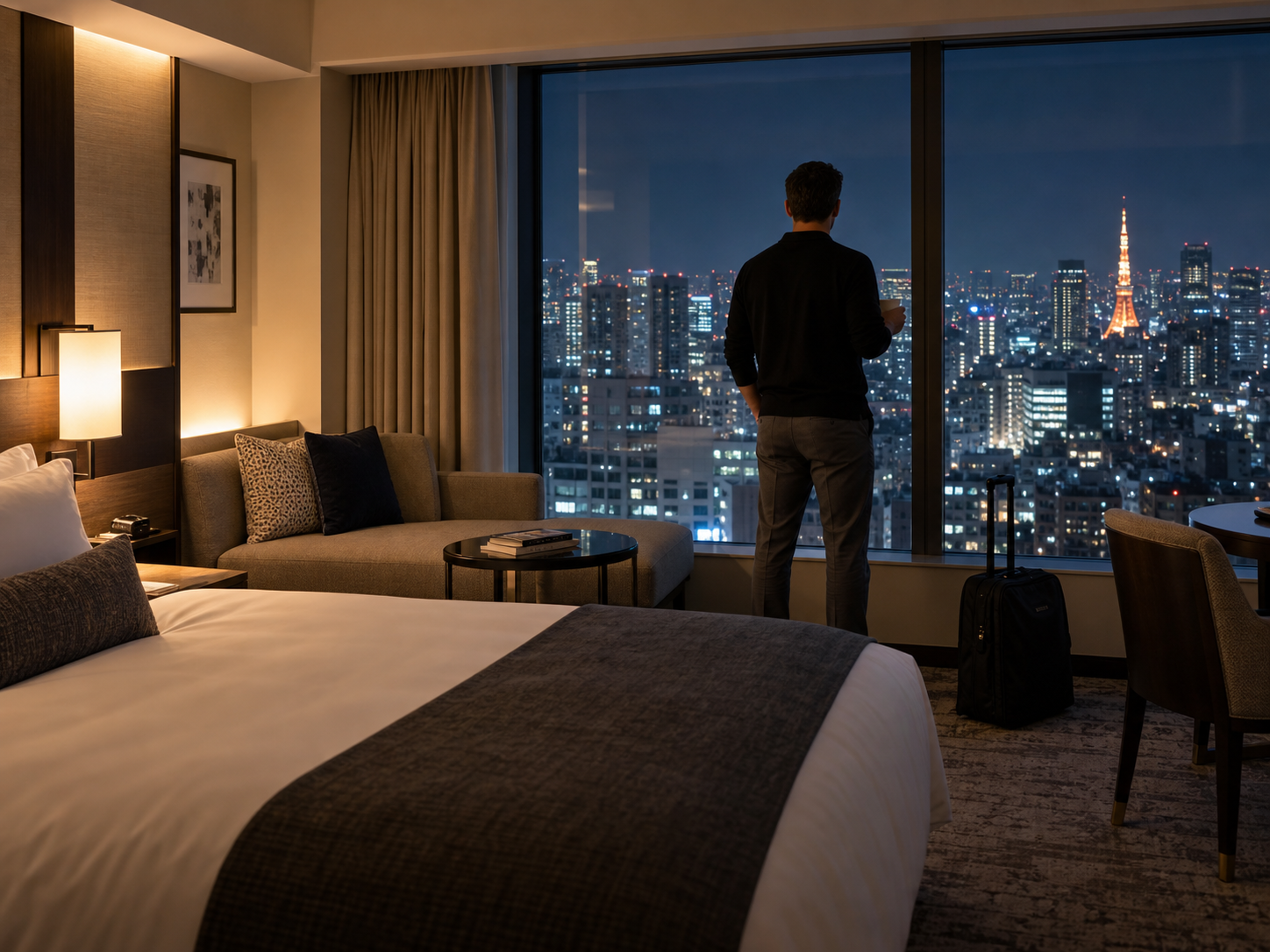
This is the situation that opens a different category of choice. Once you have a private base, the night no longer needs to revolve around finding another district, another bar, or another all-night venue. You can treat the remaining hours as private time and decide whether you want to rest, order food, work, watch something, or consider an adult outcall companion service.
For an adult traveler who is specifically interested in the last option, the useful information is not a list of nightlife districts. It is whether a service operates during the remaining hours, what is publicly listed, how booking works, what the published prices are, and whether the location itself is suitable.
When the hotel becomes the practical base
There is a psychological shift after the last train that is easy to miss. Earlier in the evening, Tokyo feels like a network of neighborhoods connected by fast trains. After rail service stops, your hotel becomes much more important. It is no longer just where you sleep; it can become the practical center from which you decide whether anything else is worth doing.
For some solo travelers, the question may shift from “how do I get back?” to whether they want company, stimulation, or simply a more intentional use of an unplanned block of time. If you are safely back at your accommodation and still want to continue the evening, a private option may make more sense than crossing the city again.
MIRAI TOKYO is an outcall delivery-health service based in Roppongi. It does not operate a walk-in lounge or reception venue. Companions are arranged to visit an appropriate hotel room or private residence, which means the location you already have is central to whether the service is relevant at all.
The service is therefore relevant only after the immediate transport question is settled and a suitable private location is available. It is not a substitute for getting back safely, resolving heavy intoxication, or finding an appropriate place to stay.
What MIRAI TOKYO lets you check in advance
If you are considering a companion after the last train, several pieces of information are public before you contact the concierge. Checking them first is more useful than treating the late hour as a reason to rush.
Published companion profiles
The companion list shows published profiles and filtering options. Use those profiles as information, not as a guarantee of a particular experience. Tags and profile descriptions can help narrow your options, but availability and any details that matter to you should still be confirmed through the normal process.
How the booking process works
The How to Use guide explains the service process, from inquiry and companion selection through confirmation and arrival. For an international traveler, knowing the sequence before the conversation starts can make a late-night decision less confusing. MIRAI TOKYO also states that English communication is available.
Published prices and transportation fees
The pricing page publishes rank-based course prices and transportation fees by area. That is especially relevant after the last train because your hotel location affects the transportation-fee category. Rather than guessing a total from a late-night situation, check the current published table for the ward where you are staying.
Business hours that extend beyond the last trains
MIRAI TOKYO currently publishes business hours of 10:00 a.m. to 6:00 a.m. the next day. In other words, the operating window overlaps with the period after most trains have stopped and before early-morning rail service returns. That makes the service relevant to the scenario, but business hours and actual companion availability are not the same thing.
The official booking guidance recommends making arrangements at least two to three hours in advance and says same-day appointments may be available depending on companion availability. That distinction is important. A late operating hour does not mean every request made at that hour can be fulfilled.
Same-night availability is a separate question
There is a natural temptation to turn “I missed the last train” into “what can I book right now?” But those are two different problems. Missing the train tells you about your location and time. It tells you nothing about which companion is available, how much lead time is needed, or whether a particular request can be arranged.
For that reason, this article does not reproduce a last-call timetable or a strategy for maximizing same-night success. The separate guide below covers the practical availability question if you decide to ask about an appointment.

Location, hotel rules, and practical limits
A hotel room can be a practical base, but never assume that every hotel handles visitors in the same way. Entry procedures, visitor policies, security arrangements, and use of guest-room facilities can differ by property. A hotel’s name, category, or location does not prove that a particular outcall service can be received there.
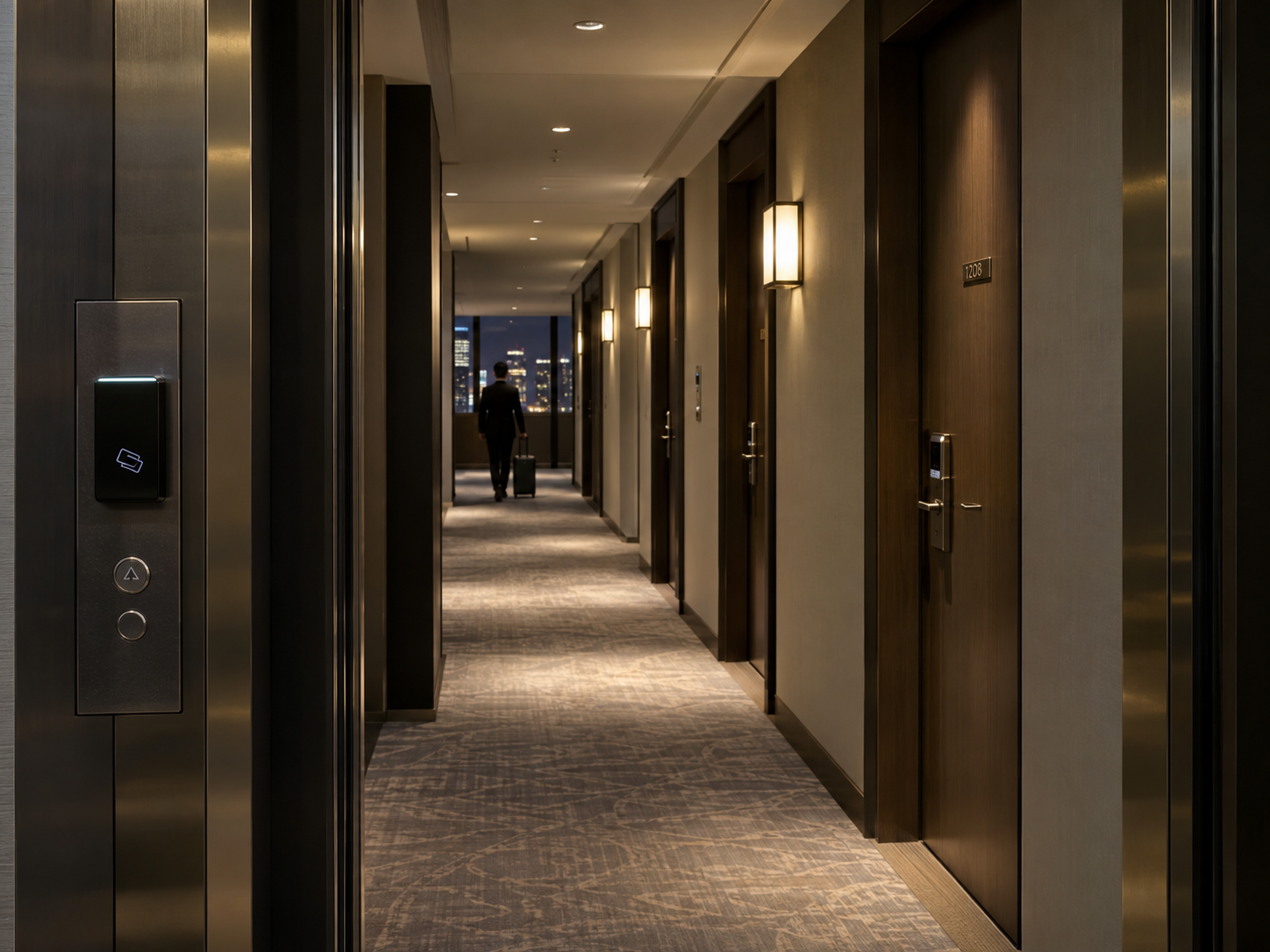
Check the rules that apply to your accommodation. If there is uncertainty, the relevant details should be clarified before an appointment is confirmed. This is more reliable than relying on anecdotes about another hotel or another traveler’s experience.
Your own condition matters too. MIRAI TOKYO’s published rules state that service may be refused when a customer is excessively intoxicated or when the location is judged unsuitable. After a long evening, those limits are not minor details. The fact that it is late does not make ordinary judgment less important.
Budget is another reason to slow the decision down. A missed train already changes transport costs. Adding a premium adult service is a separate discretionary expense. The useful approach is to look at the published course price and transportation-fee category first, then decide whether the choice still makes sense for the night you are actually having.
In any of the three situations, ending the night remains a valid decision. You can return to the hotel, sleep, and leave Tokyo for the morning. The point of the framework is not to squeeze in more activity, but to choose what fits your location, condition, budget, and actual interest.
FAQ
A calmer way to think about the hours before morning
After the last train, the cost and convenience of moving between Tokyo’s possibilities changes. Decide from your actual base: solve the return journey if necessary, stay local if that is more practical, or consider private ways to spend the remaining hours only when you already have a suitable location.
Then check your condition and budget, review the published information, and confirm same-night availability separately. The aim is a deliberate choice, not a hurried attempt to fill every hour before morning.
About MIRAI TOKYO
MIRAI TOKYO is a Roppongi-based outcall delivery-health service that arranges companions to visit suitable hotel rooms or private residences. Its published business hours are 10:00 a.m. to 6:00 a.m. the next day, which overlaps with Tokyo’s after-last-train hours.

This content is for informational purposes only and does not constitute legal advice. Information on train operation, service hours, pricing, availability, and accommodation policies can change. Check the current route, the current MIRAI TOKYO pages, and the rules of your specific accommodation before making a late-night decision. Adult services are for adults only.