











 MIRAI TOKYO concierge team
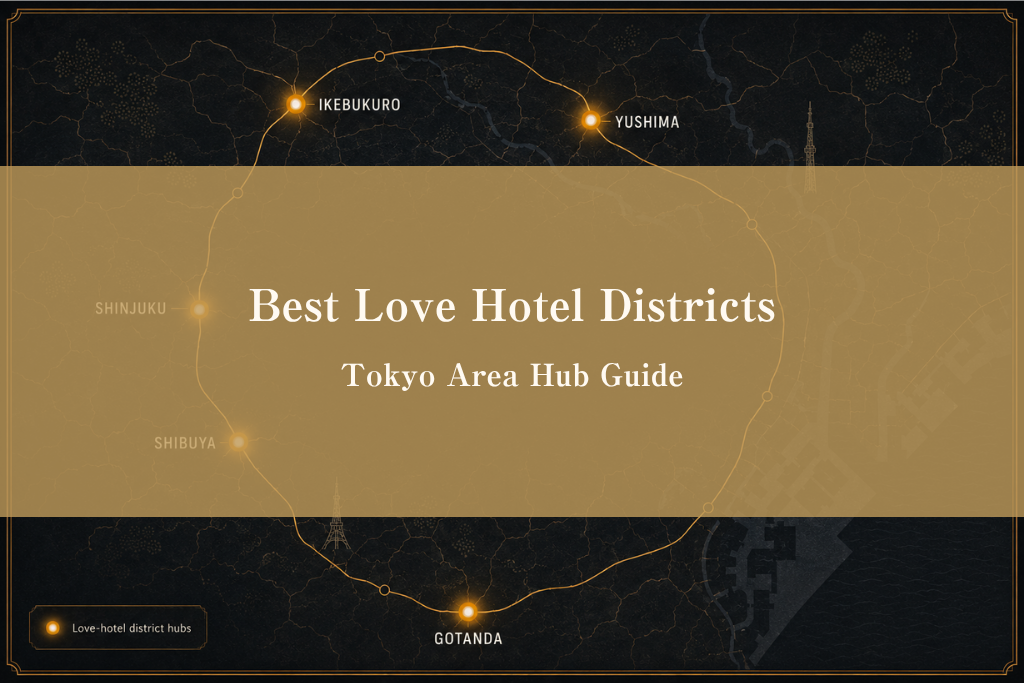
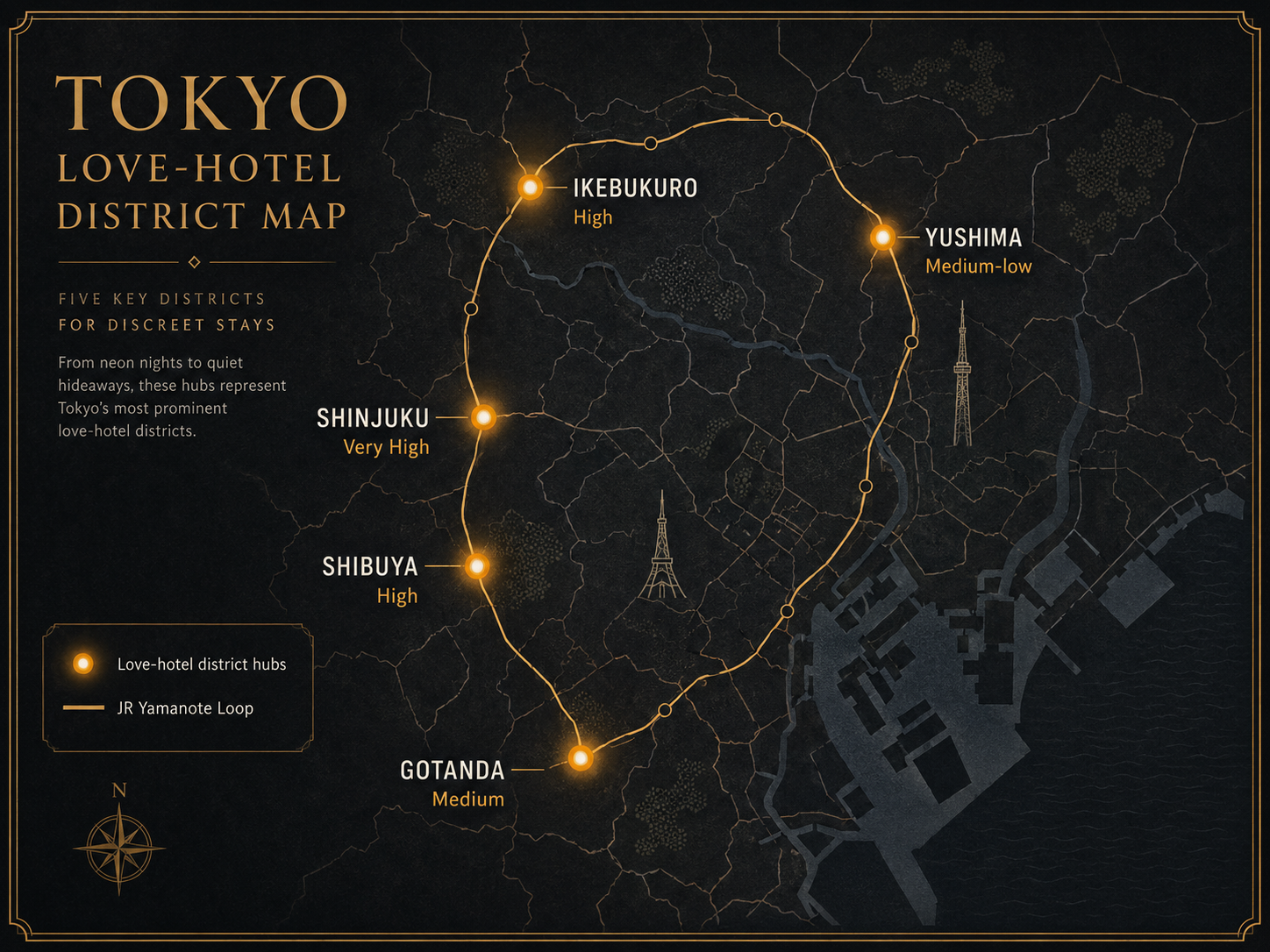
Tokyo’s love hotels are not scattered randomly—they cluster in recognizable districts, each with a different price band, train access, and neighborhood feel. If you are unfamiliar with Tokyo geography, choosing an area first makes the practical how-to (panel selection, auto-pay, rest versus stay) much easier to apply. This hub guide maps five major love-hotel corridors—Ikebukuro, Shinjuku, Shibuya, Gotanda, and Yushima—with honest notes on who each area suits, how to reach it, what to expect on the ground, and which mistakes foreign guests make when they pick a facility before picking a district. It does not rank individual properties; it helps you pick a district, then use the step-by-step love-hotel guide linked below. For premium luxury-hotel outcall in Roppongi and Minato, see the cross-links to MIRAI TOKYO’s core service area separately.
Table of Contents
How to Use This Hub
This article is the pillar for Tokyo love-hotel geography. It answers “where should I orient myself?” Individual facility reviews are intentionally omitted—properties turn over, rebrand, and reprice too often for a static blog post. Instead:
- Pick a district below that matches your access line and vibe tolerance.
- Read How to Use a Love Hotel in Tokyo for panel, payment, and passport basics.
- If your evening also involves premium city-hotel outcall, confirm service area and hotel type separately—Tokyo coverage overview, Roppongi hotels, and Ginza hotel context.
Industry context for the word “hotel” in Japanese adult formats: Deriheru vs. Fashion Health vs. Hotel Health. That article explains why “hotel health” uses love-hotel districts—not the same as booking a companion to the Park Hyatt.
How to Choose a District in 60 Seconds
If you are decision-fatigued, use this shortcut:
- Already in north Tokyo / want maximum choice? → Ikebukuro.
- Comfortable in busy nightlife and want the biggest cluster? → Shinjuku.
- Day was Shibuya shopping or meetings? → Shibuya back-street pockets.
- Want Yamanote access without Kabukicho chaos? → Gotanda.
- Dislike mega-hub noise; exploring museums or east-side culture? → Yushima / Bunkyo.
None of these is “best” in the abstract—only best relative to where you already are and how much stimulation you want before you reach the panel screen.
Ikebukuro
Vibe: Major northern hub—busy, bright, strong anime and youth culture overlay, dense love-hotel streets northwest of the station.
Access: JR Yamanote, Marunouchi, Fukutoshin lines; Narita Express and airport bus links; easy if your day was spent in north Tokyo.
Who it suits: Guests already staying or socializing in Ikebukuro; travelers who want maximum facility density and late-night inventory.
On the ground
Ikebukuro’s love-hotel streets sit slightly removed from the main Sunshine City / station glare—think parallel avenues where garage entrances stack vertically. Inventory is deep: on busy weekends, vacant panels still appear more often here than in smaller clusters. Trade-off: foot traffic and neon are high; discretion relies on building design (drive-in entries, separate exits), not empty sidewalks.
Price and timing notes
Weekend late-night surcharges are common across Tokyo love hotels; Ikebukuro’s size means you can sometimes downgrade room tier on the panel instead of hunting a new district. Rest (休憩) blocks fill faster on Friday–Saturday after 22:00—if you need a specific room type, arrive earlier or accept a simpler tier.
Who should think twice: Guests who are noise-sensitive or uncomfortable in high-stimulation districts may prefer Gotanda or Yushima despite Ikebukuro’s inventory advantage.
Shinjuku
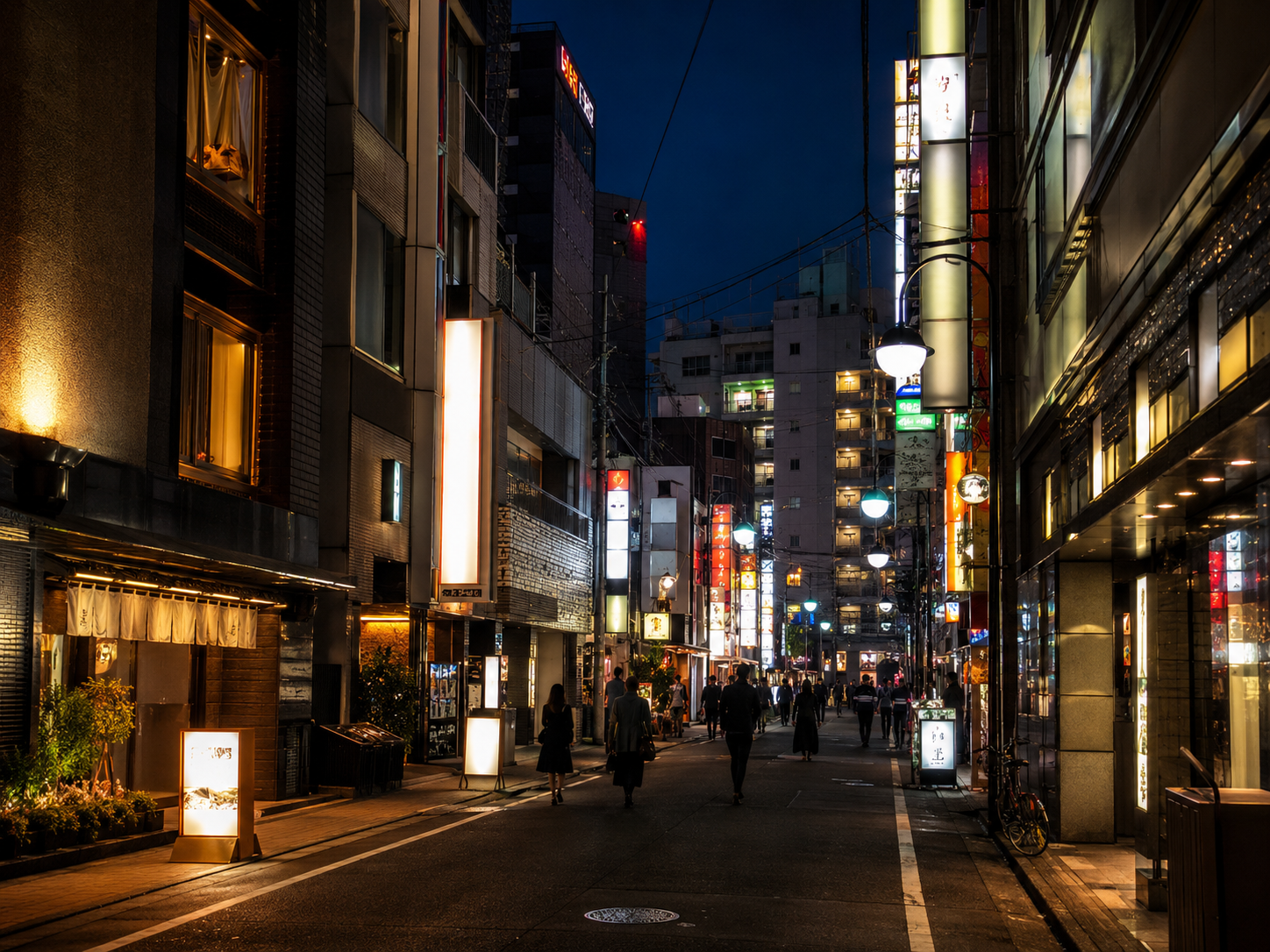
Vibe: Tokyo’s largest night cluster—Kabukicho and adjacent love-hotel streets interleave with bars, karaoke, and entertainment.
Access: JR, Odakyu, Keio, subway lines; the definition of central west Tokyo.
Who it suits: Guests who already know Shinjuku nightlife; travelers comfortable navigating busy entertainment zones.
Kabukicho adjacency—what it does and does not mean
Love-hotel streets near Shinjuku are not identical to Kabukicho tout culture. Many facilities are purpose-built for low-visibility entry: you may never walk through the neon core. Still, the psychological association matters—if touts and street hassle are your worry, enter via mapped garage addresses rather than wandering side alleys on foot. For wider Shinjuku safety framing (bottakuri bars, street touts), see the separate guide—Shinjuku & Kabukicho Outcall Guide—which covers hygiene and street-smart behavior, not love-hotel listings.
Navigation tip
Pick your facility cluster before you leave the station. Shinjuku’s scale punishes “I’ll walk until something looks fine” strategies—foreign guests report getting turned around between entertainment zones and love-hotel strips. Use a pinned address or a known avenue boundary, then switch to on-site panel choice.
Shibuya
Vibe: Youth-fashion energy, scramble-crossing tourism, love-hotel pockets on back streets away from the main crossing glare.
Access: JR Yamanote, Ginza, Hanzomon, Fukutoshin; strong if your hotel or meetings are Shibuya-side.
Who it suits: Younger travelers, fashion/shopping itineraries, guests who want a familiar “Tokyo postcard” neighborhood nearby.
Back streets vs. scramble crossing
The love-hotel stock lives on the quieter grids west and north of the crossing—not on the tourist runway itself. That separation is useful: you can spend the evening in mainstream Shibuya and slip into a discreet entry route without performing in front of the Hachiko crowds.
Facility range
Shibuya panels span compact urban rooms to themed higher-tier suites. Variety is a strength; price dispersion is wide. Compare rest versus stay on the panel before you commit—weekend tourist demand can push rest minimums up faster than on weekday business corridors like Gotanda.
Gotanda
Vibe: Lower-key than Shinjuku or Shibuya—office-by-day, love-hotel strips by-night along Yamanote-adjacent streets.
Access: Yamanote Line one stop from Shinagawa; practical for guests along the south Yamanote corridor.
Who it suits: Business travelers who want discretion without Kabukicho intensity; pairs logically with Shinagawa–Gotanda hotel stays.
Why business guests land here
Gotanda hits a middle point on the stimulation curve: legitimate love-hotel inventory without the full entertainment-district theatre of Shinjuku. If your day was meetings in Shinagawa or Gotanda and your business hotel room is not private enough, transferring to a love-hotel rest block nearby can be faster than crossing town to Ikebukuro.
Yushima & Bunkyo
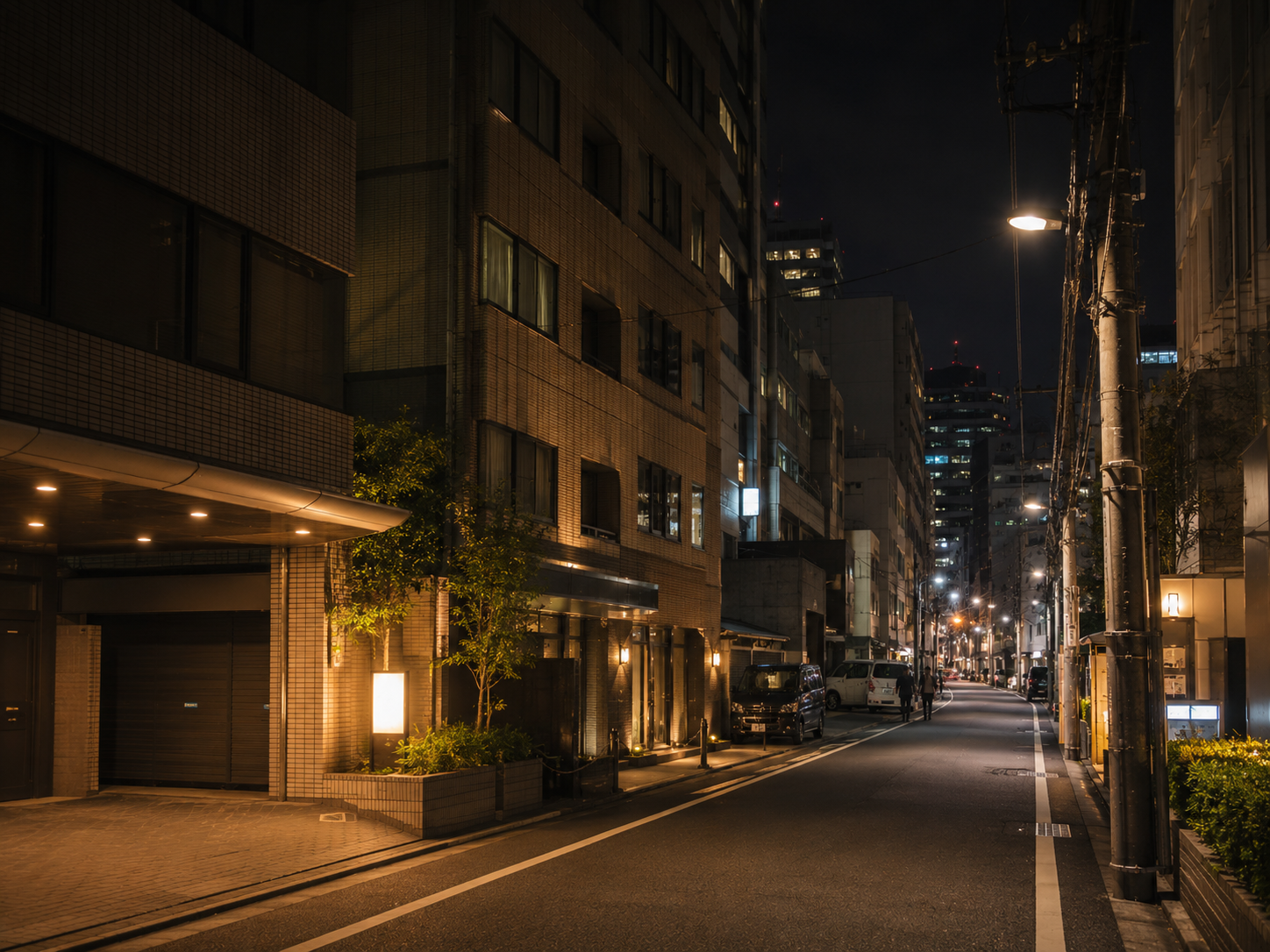
Vibe: Older Tokyo, university and museum adjacency (Yushima Tenjin, Ueno proximity), love-hotel streets with a less tourist-glare feel than Shibuya.
Access: Chiyoda Line Yushima, Ochanomizu; north-central Tokyo.
Who it suits: Guests who dislike mega-hub chaos; travelers exploring Bunkyo or east-side culture by day.
Quieter does not mean empty
Yushima and adjacent Bunkyo corridors still run professional love-hotel operations—just with less overlap from international party traffic. Panels may skew slightly older-building charm versus Shibuya’s fashion-themed tiers. English signage is spottier than Ikebukuro; machine-driven check-in matters more here.
MIRAI note
Bunkyo ward appears in MIRAI TOKYO transportation tables (¥3,000 band)—city-hotel outcall and love-hotel geography can overlap by ward even when the product format differs. A guest in a Bunkyo business hotel might use premium outcall or a local love-hotel rest block depending on privacy constraints—not both interchangeably without checking operator policy.
Common Mistakes When Picking a District
Mistake 1: Choosing a facility before a district
Random blog lists of “top love hotels” without geography strand you in taxi rides across town. District-first reduces transit friction and narrows panel hunting to streets you can actually reach tonight.
Mistake 2: Assuming Roppongi works like Shinjuku
Roppongi is luxury city-hotel and nightlife territory—not a primary love-hotel cluster. Guests anchored in Roppongi usually use premium hotel outcall; love-hotel corridors in this article are the five named hubs. See Roppongi area atmosphere and Top Roppongi Hotels for that parallel track.
Mistake 3: Ignoring rest-versus-stay pricing on the panel
District choice affects availability; panel mode affects total cost. A guest who picks Shinjuku for inventory but selects stay mode when they only needed a two-hour rest block overpays—read the how-to guide before you tap confirm.
Mistake 4: Treating love hotels as automatic outcall addresses
Premium operators may or may not dispatch to love-hotel rooms. District guides solve where you sleep; operator policy solves who can meet you there. Confirm in writing—hotel premium outcall structure explains MIRAI TOKYO’s primary city-hotel model.
Quick District Comparison
| District | Intensity | Access tier | Best for | Typical trade-off |
|---|---|---|---|---|
| Ikebukuro | High | Major hub | Density, north-Tokyo days | Noise, weekend surcharges |
| Shinjuku | Very high | Major hub | Nightlife-native guests | Navigation complexity |
| Shibuya | High | Major hub | Fashion/tourism overlap | Tourist-weekend pricing |
| Gotanda | Medium | Yamanote | Discretion + business corridor | Smaller panel than Ikebukuro |
| Yushima | Medium-low | Subway | Quieter north-central | Less English signage |
District → How-To → Booking Flow
Suggested path for a foreign guest new to love hotels:
-
1. Choose district (this article)
Match your current hotel line, noise tolerance, and tonight’s starting point.
-
2. Learn mechanics
Love Hotel How-To — panel, auto-pay, passport, rest vs. stay.
-
3. On-site panel selection
Pick vacant room type; confirm mode and price band before entering.
-
4. If also booking premium city-hotel outcall
Separate track—confirm hotel address acceptance, coverage, and pricing. Roppongi / Minato: Top Roppongi Hotels, Roppongi atmosphere, premium outcall structure.
FAQ
Next: How Love Hotels Actually Work
After choosing a district, read the step-by-step panel, payment, and ID guide. For luxury city-hotel evenings in Roppongi, use MIRAI TOKYO’s booking flow.

Last Updated: 2026-06-26
This content is for informational purposes only. District character and facility availability change over time. No individual love-hotel properties are endorsed. Confirm outcall address policies directly with operators.