











 MIRAI TOKYO concierge team

The contract is signed, the presentation landed, or the project finally crossed the finish line. After a business win in Tokyo, the question is no longer what you must do. It is what kind of evening the moment deserves. You might raise one more glass with the group, sit quietly in a hotel lounge, or return to your room and let the night become more private.
The best choice is not automatically the loudest or most expensive one. It is the setting that matches your energy, the people you still want around you, and the time you need to protect for tomorrow. If private company feels right, Japan’s deriheru / outcall format—and MIRAI TOKYO’s in-room options—can be part of that decision without being presented as the only way to celebrate.
Table of Contents
- Three Settings for a Business Win
- From the Lounge to a Private In-Room Evening
- When Deriheru Is the Practical Private Option
- Why This Is Not an Ordinary After-Work Night
- Set the Tone Without Writing a Script
- Choose Company for the Tone, Not as a Guarantee
- Build the Evening Backward from Tomorrow
- Send One Clear Message to the Concierge
- FAQ
- Summary
Three Settings for a Business Win
A successful business day can end in several different emotional registers. Sometimes the room is still full of momentum, and leaving early would feel unnatural. Sometimes the celebration has already done its job, and you want twenty quiet minutes before deciding what comes next. Sometimes you know immediately that you would rather exchange the public night for private company in your hotel room.
Thinking in settings makes the decision easier than searching for a long list of Tokyo nightlife spots. Each setting gives the same achievement a different shape.
| Setting | Best fit | What to decide |
|---|---|---|
| After-party | You still want the group’s energy and a shared toast | How long to stay before the night starts feeling like another obligation |
| Hotel lounge | You want a public but quieter place to absorb the result | Whether this is the final drink or a pause before returning upstairs |
| Private room | You want the evening to continue away from colleagues and crowds | Whether you prefer time alone or adult company arranged to the room |
None of these choices is more sophisticated by default. A group celebration can be exactly right after a collective result. A drink in the hotel’s public lounge can give you enough distance to appreciate what happened. Returning upstairs can be the most deliberate choice when you want to leave the professional version of yourself at the door and enjoy a more personal evening.
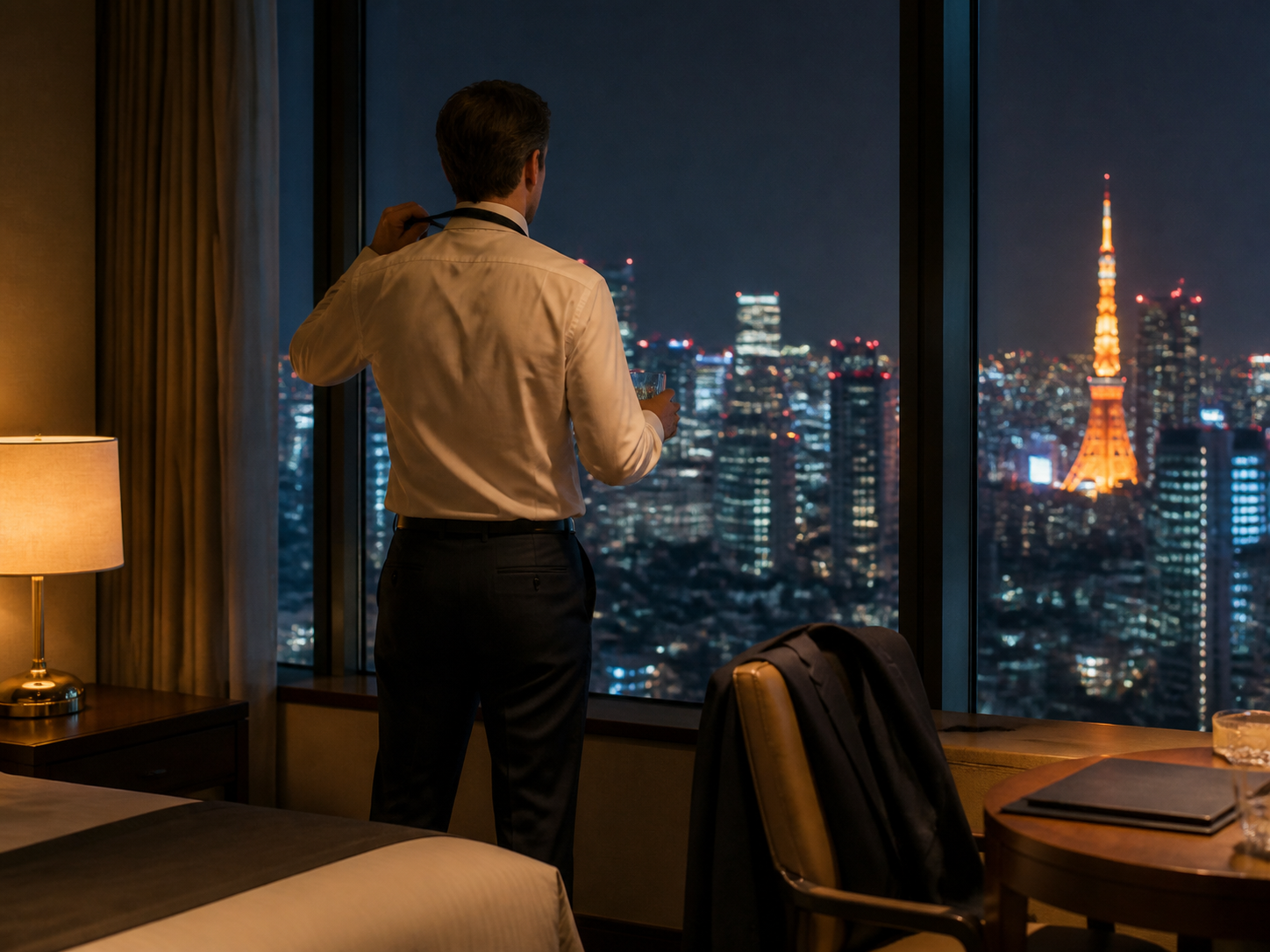
From the Lounge to a Private In-Room Evening
A hotel lounge works well as a threshold. You are no longer in the meeting or at the formal dinner, but you have not yet committed the rest of the night. One quiet drink can be enough. It can also clarify that you do not want another venue, another group conversation or an aimless late-night search.
Here, it is important to separate two different parts of the evening. The hotel lounge is a public setting that you use on your own or with the people already in your party. The private in-room portion is a separate decision. This article does not suggest that a MIRAI TOKYO companion joins you in the lounge or that an in-room plan is provided there.
If you decide to return to your room, the options widen. You can keep the night entirely to yourself: order room service, call someone at home, enjoy the view and sleep. Or, if adult company would suit the moment better, you can arrange a professional outcall visit to the hotel. That transition—from public celebration to private time—is where deriheru becomes a relevant Tokyo option rather than a forced conclusion.
The distinction also protects the tone of the evening. You do not need to turn the lounge into a place for booking discussion. You can make the practical arrangements privately, confirm the hotel rules, and return to your room knowing what has—and has not—been agreed.
When Deriheru Is the Practical Private Option
Deriheru, short for delivery health, is a Japanese adult-service format in which a companion travels to an agreed location such as a hotel room. There is no MIRAI TOKYO walk-in shop, reception lounge or place for guests to visit. The arrangement is made remotely through the concierge, and the companion comes to the location confirmed for the booking.
For an international business traveler, that format answers a practical question: how can the night continue privately without navigating another venue? MIRAI TOKYO publishes rank- and time-based courses, companion profiles, and an English-supported booking route. You can review the current pricing and course options, browse the published companion profiles, and check the official booking guide while the decision is still fresh.
One particularly relevant option is the At-Home Drinking Plan, or takunomi. MIRAI TOKYO currently lists 45-minute and 90-minute time blocks. The idea is not a public bar date. It is shared social time in the room—food, drinks or unhurried conversation—before the standard course segment. Alcohol is not the point, and it is not presented as a standalone booking.
This article does not repeat the combination rules or build sample totals. Those details belong in the dedicated guide below. Use it to understand how the takunomi block and a longer standard course fit together, then confirm the current combination and full amount through the pricing page and the concierge.
Tokyo Takunomi (Dine-In) Plan Explained | MIRAI TOKYO
What is the takunomi dine-in plan in Tokyo? What you can do, alcohol optional, and why it must be combined with a longer course—booking rules explained.
Why This Is Not an Ordinary After-Work Night
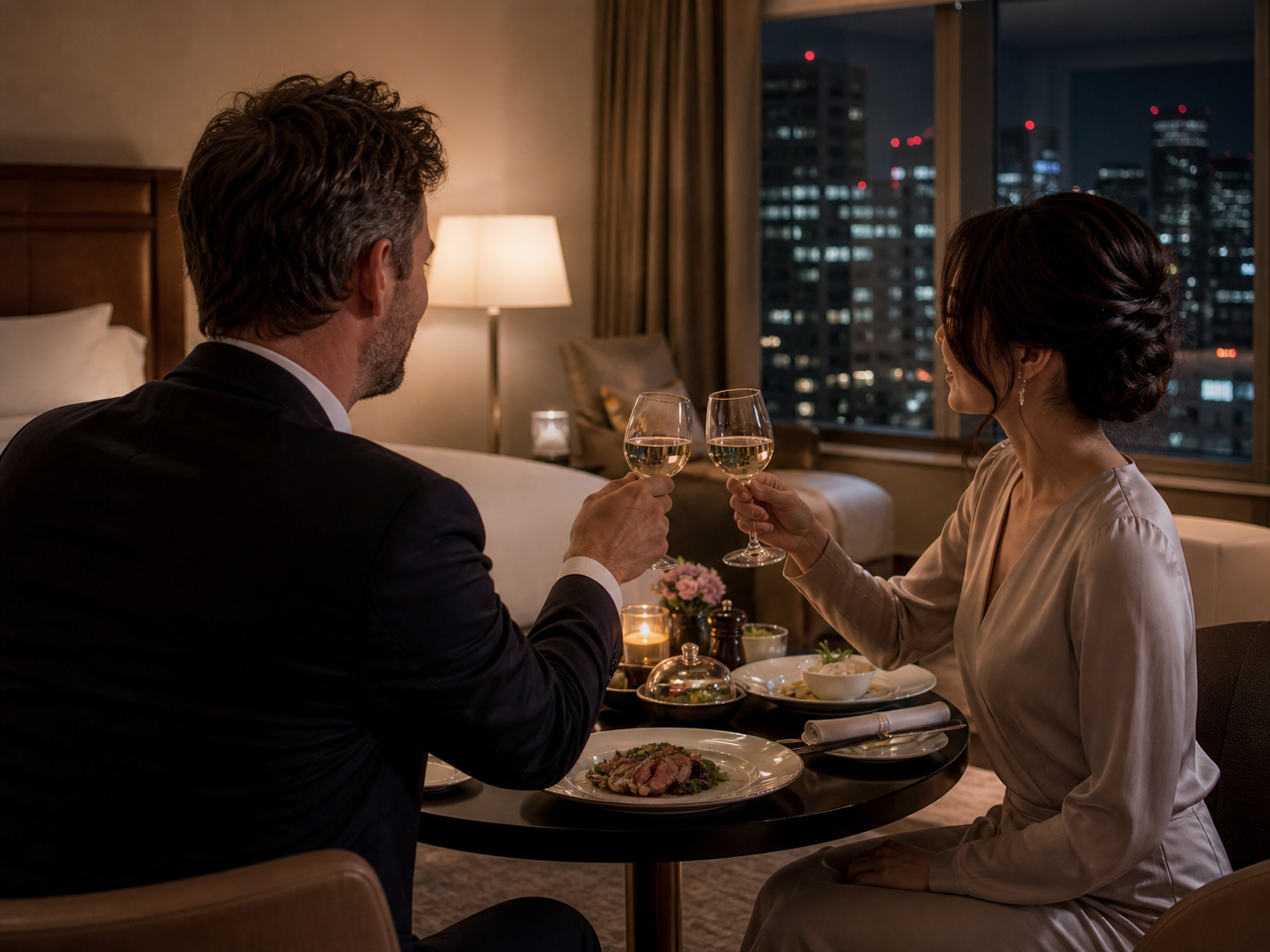
A difficult day and a successful day can lead to the same hotel room, but they ask for different writing and different choices. A tired night may be about recovery or avoiding loneliness. A successful night is about marking a boundary: the work that occupied your attention is finished, and the outcome is real.
That does not require a theatrical celebration. The most fitting tone may be a restrained toast, a slow meal or a conversation in which you do not have to discuss the deal at all. The point is not to claim that any service improves confidence, relaxation or tomorrow’s performance. It is simply to choose an evening that feels proportionate to the moment rather than letting the win disappear into email and sleep.
This is also what separates the article from a generic list of bars, views and entertainment districts. Tokyo offers all of them, but the reader’s problem is not a shortage of destinations. It is deciding how public or private the rest of the night should be—and whether the professional part of the celebration has already ended.
Set the Tone Without Writing a Script
Once you choose the room, describe the atmosphere you want in ordinary language. “I finished an important business project and would like a quiet celebratory evening” is more useful than trying to predict every moment. You might mention a toast, room service, a light meal, relaxed conversation or a longer private visit. These are wishes to discuss with the concierge, not guaranteed actions attached to a photograph or profile tag.
Keep the request grounded in time. A 45-minute takunomi block suggests a different pace from a 90-minute block, and the full booking must account for the standard course that follows. If you have already been drinking at dinner, be realistic about your condition. MIRAI TOKYO states that service may be refused when someone is considered excessively intoxicated.
You should also avoid over-designing the encounter. A successful evening does not need a staged story about the contract or a rehearsed compliment. Share only as much business context as you want. The concierge needs the tone and logistics, not confidential details about the deal.
Choose Company for the Tone, Not as a Guarantee
The companion list provides photographs, ranks, profiles and feature filters. Use them as signals that help you form a shortlist, not as promises about conversation, chemistry or behavior. A profile can help you explain what attracted your attention; it cannot guarantee how two people will feel in the room.
A practical shortlist is small. Choose one preferred profile and one or two alternatives, then tell the concierge what matters more than the name: a calm manner, an easy celebratory mood, English communication, or enough time for food and conversation before the private portion of the evening. Actual availability must be confirmed for your date and start time.
Rank and duration are also planning tools, not measures of personal compatibility. Check the published course table, decide what fits your budget and schedule, and ask for a written breakdown before confirming. If the At-Home Drinking Plan is part of the request, make sure the response clearly separates the plan block, the standard course and any other applicable items.
Build the Evening Backward from Tomorrow
A business win may deserve attention, but tomorrow still exists. Start with the time you need the evening to end, not the time you want it to begin. Work backward from your morning meeting, airport transfer, breakfast or checkout. Then account for the full combination of any takunomi block and standard course rather than thinking only about the first number you see.
Next, confirm the hotel. Check the property’s current visitor rules before booking, because policies vary and can change. Give the concierge the hotel name and address exactly as shown on your reservation. Do not assume that a familiar brand follows the same procedure at every property.
Finally, leave enough lead time. The official booking guide recommends contacting the concierge two to three hours in advance. A same-evening request may be possible depending on availability, but the published recommendation is not a guarantee that a particular companion or start time can be arranged.
Send One Clear Message to the Concierge
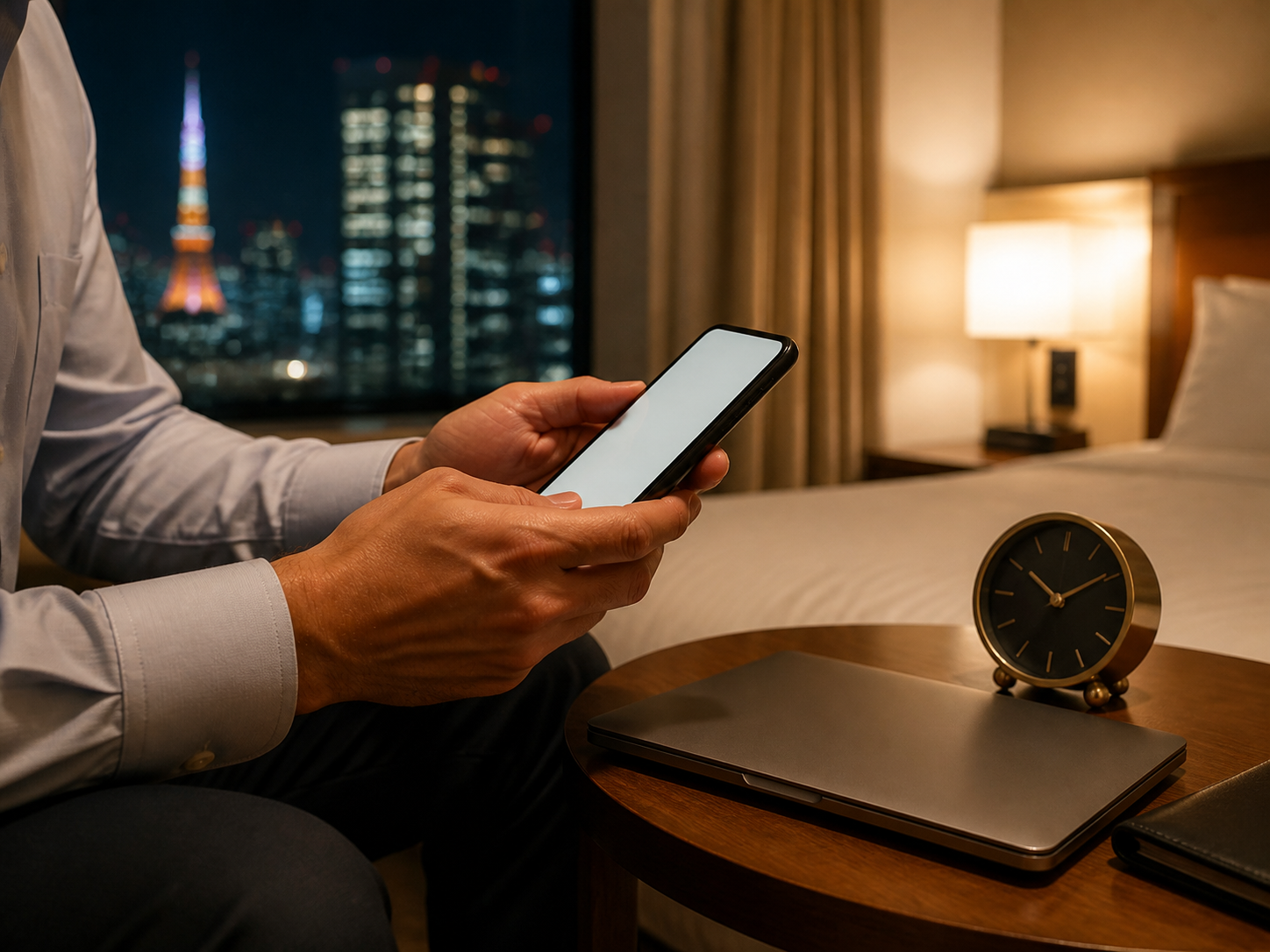
A concise first message prevents the excitement of the moment from turning into a vague booking. Include the date, preferred start and finish time, hotel name and address, language preference, plan idea, profile shortlist and approximate budget. Add one sentence about the atmosphere: for example, that you have completed an important project and want a quiet in-room celebration with time for food and conversation.
Before confirming, ask for the current plan combination, total amount, available companion, arrival instructions and any location conditions in writing. If the first choice is unavailable, decide what can change: the profile, the start time, the duration or the takunomi block. It is easier to make a good alternative choice when your priorities are already clear.
If you want a broader framework for balancing a public Tokyo evening with a discreet hotel-room plan, the guide below covers the larger questions of privacy, quality and efficiency. This article stays with the more specific moment: what to do after the business win has already happened.

The Smart Gentleman’s Guide to Tokyo: An Evening with Japan's Top-Class Talent (Fully Discreet)
A smart gentleman’s guide to a discreet, world-class Tokyo evening. Learn how to enjoy top-class in-room experiences with privacy, quality, and professional English support.
FAQ
Summary
A Tokyo evening after a business success does not need one prescribed ending. Stay with the group if the shared energy still matters. Pause in the hotel’s public lounge if you want to absorb the result. Return to your room if privacy is what the moment now needs. If adult company fits that final setting, deriheru and MIRAI TOKYO’s At-Home Drinking Plan give the in-room evening a practical form. Choose the tone, protect tomorrow’s schedule, review the current profiles and plan conditions, and let the concierge confirm what is actually available.
Choose the Company for Your Private Celebration
Browse MIRAI TOKYO’s current companion profiles, then contact the concierge with your hotel, timing and preferred tone for the evening.

This content is for informational purposes only and does not constitute legal advice. It describes adult-companion options for a private hotel evening. Plan availability, pricing, companion schedules and hotel visitor rules may change; always confirm current service terms through the official booking guide and confirm visitor rules directly with your accommodation before booking.