










 MIRAI TOKYO concierge team
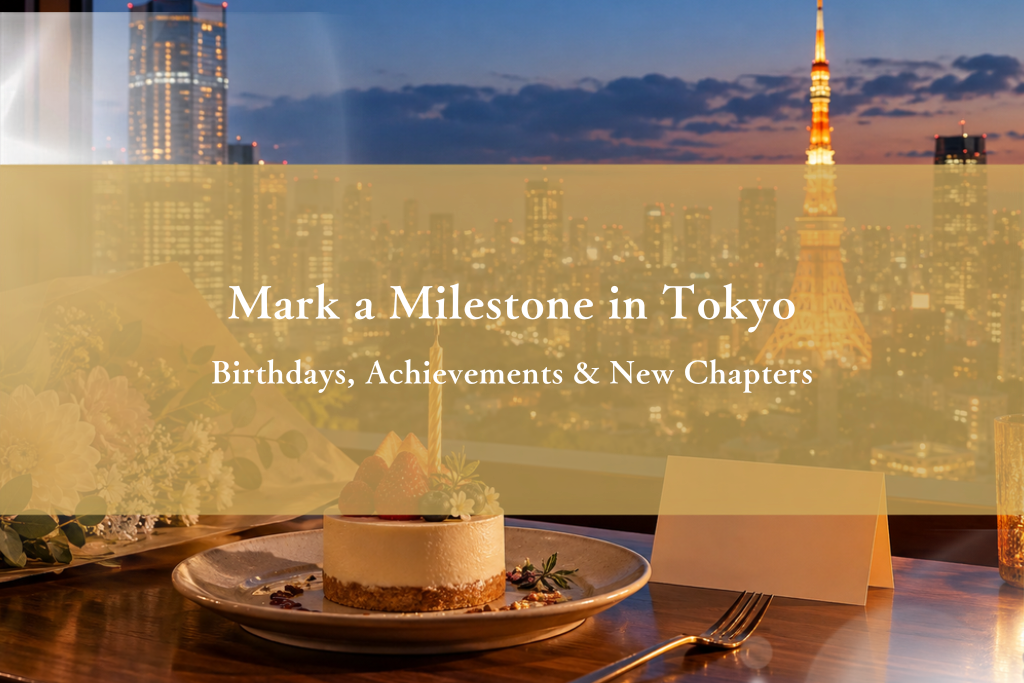
Some Tokyo evenings deserve more intention than an ordinary night: a birthday, graduation, retirement, reunion, completed project, recovery, or personal reset. The useful starting point is not whether the occasion looks impressive from the outside. It is what the person being celebrated would value, who should take part—if anyone—and which details need to be arranged before the date.
A memorable evening does not need the longest itinerary. Decide whether the lasting moment should be conversation, a Tokyo view, a shared experience, or uninterrupted time. Then protect it with realistic travel time and confirmed reservations.
Table of Contents
What Makes This Tokyo Evening Worth Marking?
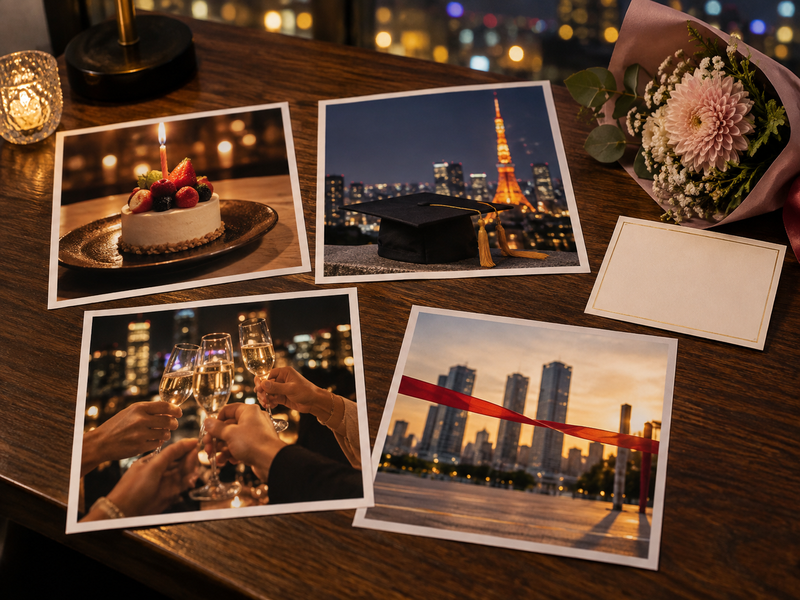
A birthday has a clear person at its center, but not every meaningful occasion comes with the same label. Graduation, retirement, reunion, completing a demanding project, recovering from a difficult period, or choosing a fresh start can also justify a deliberate evening. The common question is practical: what would make this particular achievement or transition feel acknowledged?
The label does not decide the activity. Someone marking a retirement may want a lively performance rather than a formal dinner. A solo guest may want an elegant meal, not an activity marketed as “for solo travelers.” Friends celebrating a birthday may care more about laughter and easy transport than a skyline. Start by completing one sentence: “I want the person at the center of this evening to feel…” Recognized, relaxed, surprised, connected, proud, playful, or unhurried are more useful answers than “special.”
Then decide what the night is meant to acknowledge. It may be time with someone you rarely see, a completed chapter, a hard-earned achievement, gratitude to family or friends, or a decision to begin again. The answer gives the evening a center without forcing it into a standard celebration package.
Separate the Occasion from the Company
A birthday, graduation, retirement, reunion, achievement, or personal reset can be marked alone, with friends, with family, or with colleagues. Treat “what happened” and “who is taking part” as two separate decisions. The right guest list follows the person and purpose, not a ready-made image of celebration.
| Company | Useful priority | What to avoid |
|---|---|---|
| Solo | A choice you genuinely enjoy without needing an audience | Building the night around how it may look to other people |
| Colleagues or mentors | Recognition with a clear beginning and end | Letting work talk consume the whole occasion |
| Friends | Shared energy, a clear meeting point, and easy movement | An itinerary that leaves the birthday person managing everyone |
| Family | Comfort, dietary needs, access, and enough time to talk | Choosing spectacle while overlooking practical needs |
For a surprise, keep the surprise smaller than the evening. A hidden cake or final view can be delightful when the recipient likes surprises. A completely concealed dress code, long transfer, or expensive commitment can create pressure instead. The person being celebrated should still understand the kind of night they are entering.
Five Ways a Tokyo Evening Can Take Shape
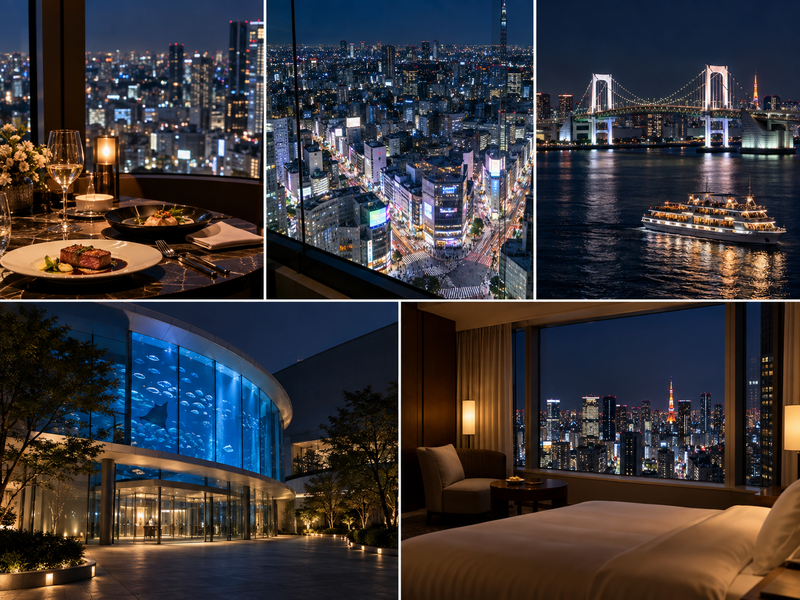
Tokyo’s official tourism information presents a broad night landscape rather than one standard celebration route. SHIBUYA SKY and the Tokyo Metropolitan Government observatories place the skyline at the center. Tokyo Bay and the Sumida River offer a different scale from street level. Roppongi, Shibuya, Ginza, and the waterfront each change the pace. The useful comparison is not a ranking of venues, but the role each setting plays.
1. Make dinner or a bar the main event
This works when conversation and service matter more than moving through the city. A counter can feel focused; a spacious table can make longer conversation easier; a high-floor room in Ginza, Marunouchi, Shinjuku, or the bay area can combine food with a view. The Imperial Hotel Tokyo, Tokyo Disney Resort hotels, Hilton Tokyo Odaiba, and Tokyu Hotels publish celebration examples with different combinations of champagne, cake, photographs, flowers, meals, or rooms. They show how much the contents can vary; they are not a ranked shortlist.
Confirm the number of guests, seating, dietary accommodation, dress code, last order, cancellation terms, and whether any message or celebration item requires advance notice. If dinner is the center, resist adding another timed booking immediately afterward. A meal meant for conversation loses its value when everyone is watching the clock.
2. Let a skyline or waterfront view create the pause
An observation deck, bay view, riverside walk, or illuminated district can give an achievement or transition a visible marker. SHIBUYA SKY offers a high-rise perspective in a busy district; the Tokyo Metropolitan Government observatories give a different Shinjuku view; Odaiba places Rainbow Bridge and the bay in front of you. These examples identify scale and atmosphere rather than prescribe a route.
Check timed-entry rules, closing times, weather exposure, seasonal illumination dates, and the walk from the station. Sunset slots and special events may need planning. Leave enough time to share the view rather than using it as a brief photo stop between reservations.
3. Combine movement, dinner, and scenery on a cruise
Tokyo Bay and river cruises can combine several parts of the night without repeated transfers. GO TOKYO lists options such as the Symphony Tokyo Bay Cruise from Hinode Pier and notes that dinner cruises are popular and generally need advance reservations. Routes, duration, meal format, boarding points, and operating dates differ, so confirm them with the cruise provider rather than treating “Tokyo cruise” as one product.
A cruise is less flexible than a walk or bar. Late arrival can affect the whole booking, and weather or operations may change. It suits people who enjoy a defined beginning and end; it is less suitable when the group wants to decide everything spontaneously.
4. Put a shared interest at the center
Night museums, aquariums, live performances, karaoke, and seasonal events can carry an occasion without requiring constant conversation. GO TOKYO highlights evening options such as the Mori Art Museum, Sumida Aquarium, and Tokyo Tower; the right choice depends on current opening days and the people involved. Check the event calendar, language needs, admission time, photography rules, and finish time.
5. Keep the evening centered on the hotel or private space
A hotel-centered evening reduces travel and can make privacy, rest, or uninterrupted conversation the priority. The relevant option might be an official room package, in-room dining, or simply returning after one public activity. Read exactly what the hotel provides; a room with a view does not automatically include decorations, late checkout, a cake, or private dining.
For an interested adult, hotel-centered time can also involve a licensed delivery health service. That is not sightseeing or an ordinary social companion booking. Because it is a sexual adult-entertainment business, its nature, eligibility, rules, and current terms must be understood before it belongs in anyone’s plan.
Confirm the Details That Carry the Evening
A meaningful date magnifies small disappointments. The best protection is not a more elaborate plan; it is knowing which details are confirmed. Sort each detail into one of three groups: booked, still to ask, or safe to decide on the day.
- Booked: timed entry, restaurant or cruise reservation, room, ticket, and essential transport.
- Still to ask: cake, flowers, message plate, photography, dietary changes, accessibility, late arrival, or another special arrangement.
- Decide on the day: a short walk, one extra drink, or a nearby view that does not risk the central booking.
Use the provider’s current page, not a roundup written months earlier, to check inclusions and deadlines. Ask whether an item is included, available for an additional charge, or unavailable. If the answer is unclear, do not build the emotional climax of the night around it. Also check the final train or decide on a taxi budget before the evening begins. Most Tokyo rail services do not run through the night, though schedules and exceptional operations vary by route and date.
An Adult Private Option: What MIRAI TOKYO Is and Is Not
MIRAI TOKYO is a licensed delivery health service—known in Japan as deriheru—for guests aged 18 or older. It is a sexual adult-entertainment business in which professional companions visit hotels or private residences under the service’s published rules. This is not a restaurant, tour, ordinary paid social companion, or hotel celebration package. It is relevant only when an eligible adult independently wants this kind of private service and understands what it is.
The official pages publish companion profiles, courses grouped by rank and duration, transportation fees, and an At-Home Drinking Plan described as time for drinks and meals in your own space with a chosen companion. The How to Use page explains the service, rules, and inquiry sequence. Current amounts and plan conditions belong on the pricing page. If profile information is relevant, the published companion list shows current listings and filters.
The main service, pricing, and booking pages reviewed for this guide do not list a standard celebration package with cake, flowers, room decoration, an outing, or a surprise. Photography and recording are prohibited in the published precautions. Any other celebration-related request must be raised before booking and treated as unconfirmed unless the concierge explicitly confirms its possibility, conditions, and total cost.
The DIAMOND description mentions special occasions, but that wording does not promise a particular extra. Rank is one published category among several. A meaningful date never changes the service rules or implies consent to an unpublished arrangement.
Build a Plan Around People, Not Labels
Turn the earlier choices into a short decision record rather than another itinerary. This prevents an optional detail from quietly becoming essential and makes it easier to compare plans with different booking deadlines.
Before the date, write down five answers:
- What are we marking?
- Who is the evening for, and who is joining?
- What one feeling or experience should lead?
- What must be booked or confirmed?
- What can remain optional without harming the night?
This works for a birthday with friends, a family reunion, a retirement with colleagues, or a solo achievement. The label opens the planning conversation; it does not dictate the answer.
FAQ
Summary
A birthday, graduation, retirement, reunion, completed project, or personal reset can all deserve a deliberate evening. None requires a luxury package or a crowded schedule. Separate what you are marking from who is taking part, decide how recognition should be expressed, and confirm the details that support it.
Tokyo can place that memory at a table, above Shibuya or Shinjuku, on the bay, inside a cultural venue, or in a hotel-centered evening. Check the details that make the chosen setting work, and leave the rest flexible.
About the Publisher
MIRAI TOKYO operates an adult outcall companion service for guests aged 18 or older, with published information about its service process, rules, current pricing, plans, and companion profiles. This guide places that private option within the wider choices available for marking an evening in Tokyo.
This content is for informational purposes only and does not constitute legal advice. Opening hours, prices, availability, plan contents, transport schedules, and special-arrangement policies may change. Confirm current terms with each provider. MIRAI TOKYO is an adult service for guests aged 18 or older; its published rules and restrictions apply.