










 MIRAI TOKYO concierge team
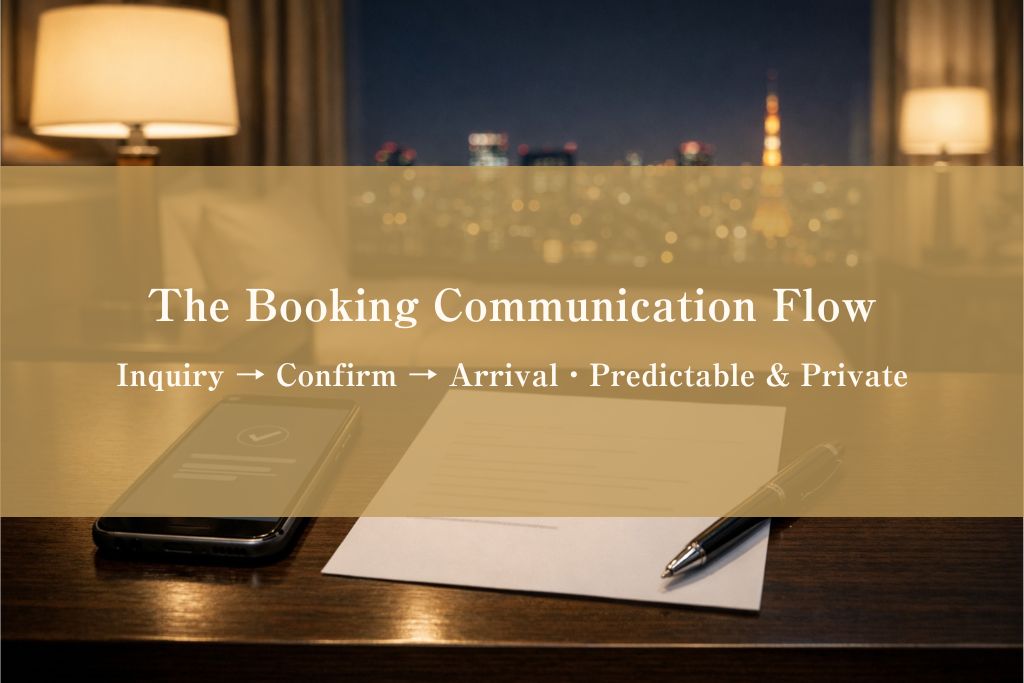

In Tokyo’s private booking space, safe outcomes usually start with how you communicate: clear English in writing, an all-inclusive quote before you confirm, predictable coordination on the day, and a process designed to avoid surprises.
Table of Contents
Introduction: Why Your First Message Matters
Navigating Tokyo’s private booking scene can feel intimidating at first. When you search for an English-speaking escort in Tokyo, you’re not only looking for a companion—you’re looking for a process that feels reliable. In a loosely regulated market, the way a service communicates is often the clearest sign of how professional it really is.
Many high-visibility travelers worry that a first inquiry could lead to spam, unclear pricing, or privacy issues. Those concerns are reasonable. Lower-quality operators often use rushed, disorganized, or overly aggressive messaging that puts speed ahead of safety.
This guide breaks down what a professional communication flow should look like—from the first message to day-of arrival—so you can recognize solid operators quickly and avoid problems before they start.
Start here: English-Speaking Escort Service in Tokyo: What Happens When You Reach Out
The Professional Timeline: Step-by-Step Secure Interaction
A well-run service usually follows a clear timeline, similar to a concierge-style booking: (1) initial inquiry, (2) companion selection, (3) booking confirmation, and (4) service delivery. When communication follows this structure, the experience tends to feel calmer, safer, and easier to manage.

Step 1: Initial inquiry & consultation (contact + requirements)
Your first message—via WhatsApp, LINE, or an official form—should receive a timely, polite reply in clear English.
- Professional standard: The concierge asks only for what’s needed to advise properly (date/time window, duration, hotel area, and general preferences).
- What you should receive: A simple explanation of what information is needed now, what comes later, and how the process will move forward.
- Data minimization: A professional service explains what information is needed (and what is not), keeps details concise, and avoids unnecessary personal questions.
Step 2: Companion selection (options + clarity)
Once your requirements are clear, the operator should present realistic options you can genuinely choose from.
- Professional standard: Up-to-date profiles, confirmed availability, and straightforward answers in English about communication level, general vibe, and what can or cannot be promised.
- What you should receive: Enough detail to decide comfortably—without pressure, confusion, or last-minute changes.
- Red flag: Generic photos, vague replies, or refusal to confirm whether a specific option is actually available.
Step 3: Booking & confirmation (all-inclusive quote + written terms)
Before you confirm anything, you should receive a clear quote and a short written summary.
- Professional standard: A written, all-inclusive quote (service fee plus transportation; taxes if applicable) along with a simple recap of date, time, meeting method, and key rules.
- Cancellation clarity: A cancellation policy explained in English and confirmed in writing, even if terms vary by timing.
- Red flag: “Starting from…” prices, “we’ll discuss extras on arrival,” or pressure to use unusual or untraceable payment methods.
Step 4: Service delivery (day-of coordination → arrival)
On the day itself, communication should stay minimal, calm, and discreet—focused on a smooth arrival, not unnecessary chatter.
- Professional standard: A brief update before arrival (often 30–60 minutes) and clear instructions that minimize attention in shared hotel spaces.
- What you should feel: Predictability. If anything changes due to traffic or hotel logistics, you’re informed early and calmly.
- Security check: Coordination stays consistent and professional, without sudden renegotiation or pushes into personal channels.
How to Spot Red Flags (Risky Communication Patterns)
Consistent professionalism is difficult to fake. If you notice these patterns, it’s usually best to pause and reconsider.

- Insecure data handling: Requests for sensitive documents through public DMs or unclear channels, with no explanation of how data is handled.
- Aggressive pressure: “Book now or lose this option” tactics meant to rush you past basic judgment.
- Ambiguous billing: Prices shifting mid-conversation or inability to explain differences between options in clear English.
- Unnecessary personal questions: Requests for details unrelated to booking (such as social media accounts or excessive personal information) are a sign to pause.
The MIRAI TOKYO Approach: Security by Protocol
At MIRAI TOKYO, communication is designed to reduce uncertainty and protect privacy. The booking process should feel as refined and controlled as the experience itself.
Private-by-design communication
We coordinate through familiar platforms like WhatsApp and LINE, keeping messages focused, calm, and minimal. We collect only what’s necessary to deliver a smooth booking.
Predictable coordination for hotel guests
Clear timing windows and discreet, hotel-ready coordination help avoid confusion or visibility in shared spaces.
English-first administration
Key policies—pricing clarity, cancellation terms, and boundaries—are explained in clear, professional English to prevent misunderstandings.

FAQ
Conclusion
What happens in the room is often reflected in what happens on your phone beforehand. Disorganized booking usually leads to uncomfortable outcomes. Clear communication supports calm, controlled experiences.
Choose a provider with a documented, professional communication flow—so you’re not gambling with your privacy, your time, or your night in Tokyo.
Luxury means trust, respect, and quiet confidence.
Start Your Secure Booking Flow
If you value clarity, professionalism, and discreet coordination, our concierge team can provide respectful guidance and transparent information.

About This Guide
This guide was prepared and reviewed by a concierge team experienced in supporting international visitors in Tokyo. It outlines practical communication flows, common red flags, and professional standards for secure, discreet coordination. Reference: Booking Guide – Service Process.