











 MIRAI TOKYO concierge team

A long stay in Tokyo gives you something a short visit cannot: time to learn what kind of evening works for you, then decide whether you would like to repeat it. This guide explains how to choose a flexible night for a first MIRAI TOKYO booking, match the evening format with a companion, and request the same companion again later in your stay through honshimei (Repeat Request). It also covers when a different profile or a night of rest may suit you better, what details to send the concierge, and how to confirm the full price. The practical flow is simple: do not fill every night in advance; book one evening with room to breathe, then use that experience to plan your next open night.
A long-stay idea: begin with one MIRAI TOKYO companion on a night when your schedule has room to breathe. If you enjoy the match, your remaining nights give you the option to request the same companion again through honshimei. Review the current companion list, send the concierge your hotel and two possible dates, and confirm availability and the full price before each booking.
Contents
- Start with one evening, not the whole stay
- Choose the evening before the companion
- Make the first booking easy to confirm
- Use the first evening as a decision point
- Continuity, variety, or rest
- When honshimei fits a long stay
- Send one clear long-stay request
- A flexible pattern for several evenings
- Frequently asked questions
- Summary
Start with One Evening, Not the Whole Stay
Short trips reward precision: there may be only one free night, so everything has to fit around it. An extended stay gives you another advantage—the ability to wait for a night when you are actually present, rested, and not watching the clock. That flexibility is more useful than a packed itinerary.
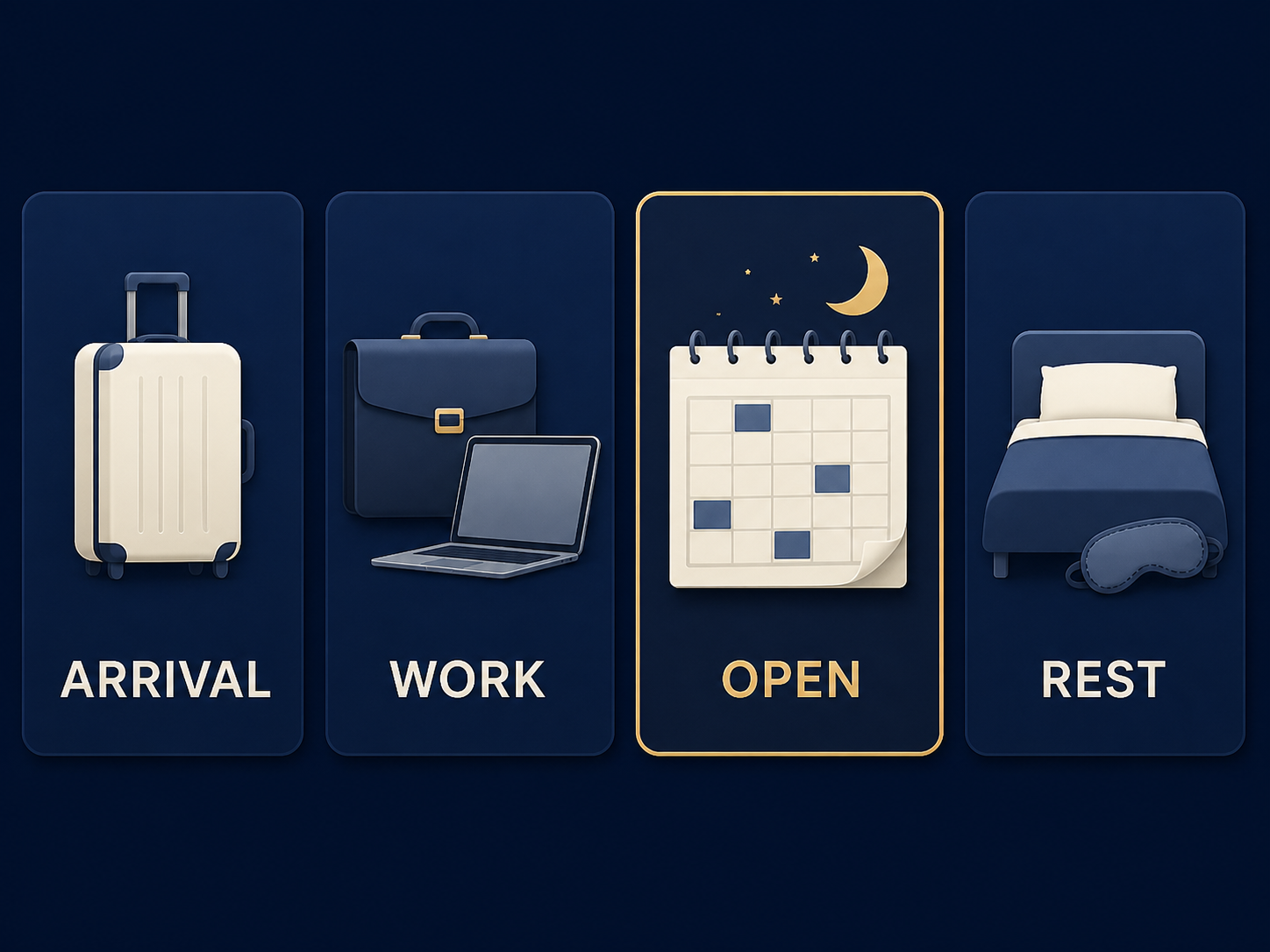
Begin by dividing your evenings according to certainty, not by trying to give every date an activity. An arrival night is vulnerable to flight delays and fatigue. A night after a client dinner may have no reliable start time. A night before an early meeting may not suit a long booking. The better candidate is usually an evening with a clear finish to the day and enough time afterward that the booking does not feel compressed.
This does not require deciding the entire stay on arrival. Identify one preferred date and one fallback date. If your schedule is stable, you can contact the concierge in advance. If it is changing, say that openly and ask what can be held or confirmed under the current booking terms. MIRAI TOKYO recommends advance contact, while same-day availability can depend on the companion’s schedule.
Keeping later nights open also changes the emotional tone. The first booking does not have to carry the weight of being the one definitive Tokyo evening. It can be complete on its own. If the match feels right, a later opening in the same stay gives you the option to request continuity. If it does not, you still have time to choose differently without turning the first experience into a promise about the next one.
Choose the Evening Before the Companion
Profile browsing is appealing, but it is easier to choose well after you know what kind of time you are arranging. A quiet in-room evening after a full workday is a different request from a longer social evening with food and conversation. Start with format, duration, and pace; then look for a companion whose published profile fits that plan.
MIRAI TOKYO publishes rank-based standard courses from 60 to 180 minutes. It also lists an At-Home Drinking Plan for guests who want dedicated in-room time for food, drinks, and conversation in combination with a course. The published plan fee is ¥19,000 for 45 minutes or ¥35,000 for 90 minutes, with the course fee and applicable nomination fee added separately. Alcohol is not the point of choosing it; what matters is whether you want a slower social opening to the evening. Confirm the valid course combination and current total on the pricing page and with the concierge before you commit.
For a first booking during a busy stay, the standard course is often the simpler structure to consider because it requires fewer moving parts. If your evening is open, you have enough time, and conversation over a meal is part of the experience you want, the At-Home Drinking Plan may be worth discussing. Neither is automatically more luxurious. The right format is the one that fits your available time without making the evening feel rushed.
Next, review the published profiles. Rank and feature tags are separate selection tools, so use them for separate decisions. Rank belongs to the course and price framework. Feature tags help narrow visual style or a possible interaction tendency, but they do not guarantee personality, language ability, behavior, or a particular result. Save two or three profiles you would genuinely be comfortable booking rather than treating one name as the only acceptable outcome.
| Decision | What to settle first | What remains to confirm |
|---|---|---|
| Standard course | Rank, duration, preferred date, and hotel | Companion availability, total price, and arrival details |
| At-Home Drinking Plan | Dine-in length, longer course, food or drink preference, and total time | Valid combination, companion availability, and itemized total |
| Companion choice | Two or three published profiles that fit the evening | Current schedule and which request can be arranged |
Make the First Booking Easy to Confirm
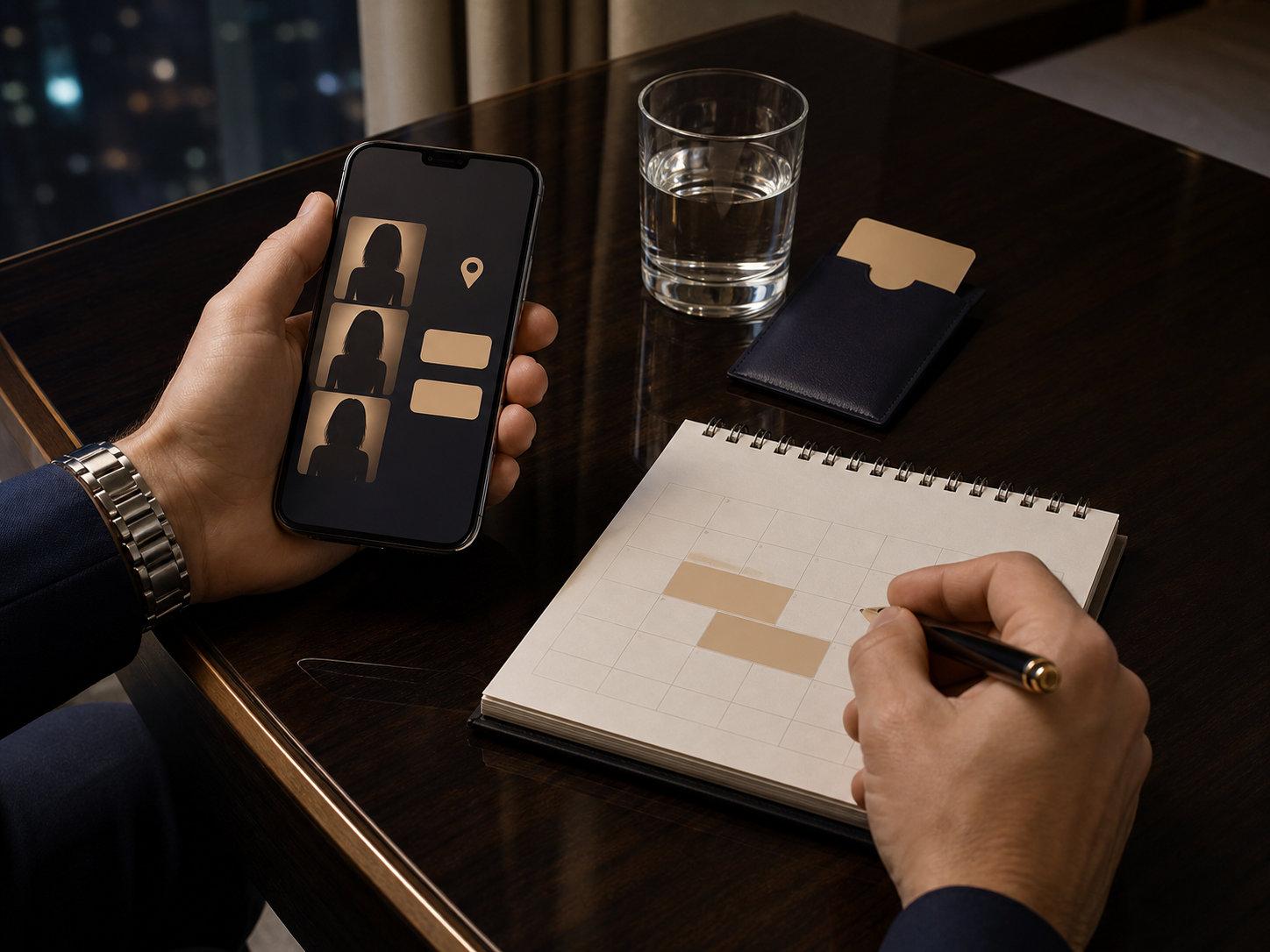
A long message is not necessarily a clear message. The concierge needs a small set of details that define the booking: date, time, duration, hotel, companion choice, and plan. For a long stay, add the dates on which you are genuinely free. This gives the concierge useful flexibility without implying that you want several bookings at once.
-
Give one preferred date and one fallback
Use exact dates and local Tokyo time. “Sometime this week” creates unnecessary back-and-forth, while two real options let the concierge check the companion’s schedule efficiently.
-
Send the property name and full address
The neighborhood alone is not enough. Transportation fees are published by ward, and similar hotel names can cause confusion. If you will move hotels during the stay, connect each candidate date to the correct property.
-
Name the plan and total time
State the rank and standard-course duration you are considering. If you want the At-Home Drinking Plan, include its length and ask the concierge to confirm a valid combination rather than calculating the structure from memory.
-
Provide a real shortlist
List your preferred companion first, followed by one or two alternatives. Do not add names you would not actually confirm. If the profiles share a quality you value, describe it briefly and neutrally.
-
Ask for the itemized total in writing
Request the course, nomination, plan, transportation, and any other applicable line item before confirmation. A long stay may involve different hotel addresses, so do not assume the same transportation amount applies on every date.
The official booking guide explains the sequence from inquiry and companion selection through confirmation and arrival. Reading it before the first request lets you keep the message focused on your actual schedule and priorities.
Use the First Evening as a Decision Point
The first evening should not be framed as an audition for a future relationship. You are booking time with a professional companion under agreed terms. What the evening can give you is better information about your own preference: whether the pace suited you, whether conversation felt easy enough, whether the duration was right, and whether the format matched your energy that night.
Those observations are practical because profile selection cannot answer them in advance. A photograph may attract you, and a published tag may help narrow the list, but neither can guarantee chemistry. A first booking turns an abstract preference into direct experience without obligating you to repeat it.
Afterward, ask simple questions. Did you wish the evening had more conversational time, or was the standard course structure right? Did the booking feel calm, or did your work schedule leave you too rushed to enjoy it? Would seeing the same companion reduce decision fatigue on another open night, or would you rather choose a different profile and mood? The answers concern your planning; they do not rate the companion as a person.
There is also value in waiting until the next day. A late-night impulse can make every enjoyable experience feel like something that must be repeated immediately. A long stay removes that pressure. Check your remaining schedule, sleep, work obligations, and budget before contacting the concierge again.
For a Later Evening: Continuity, Variety, or Rest
Once the first booking is complete, the next open evening has three legitimate directions. None is a required next step, and none proves that the first night succeeded or failed.
| Later-evening choice | When it may fit | What to keep in mind |
|---|---|---|
| Request the same companion | You valued the established pace and would prefer continuity over browsing again | Use a repeat request; availability and all booking terms still need confirmation |
| Choose a different companion or format | Your mood, available time, or preferred style has changed | Make a new shortlist and do not assume one tag predicts the experience |
| Keep the night free | You need sleep, work time, privacy, or an unscheduled evening | A long stay does not have to become a target number of bookings |
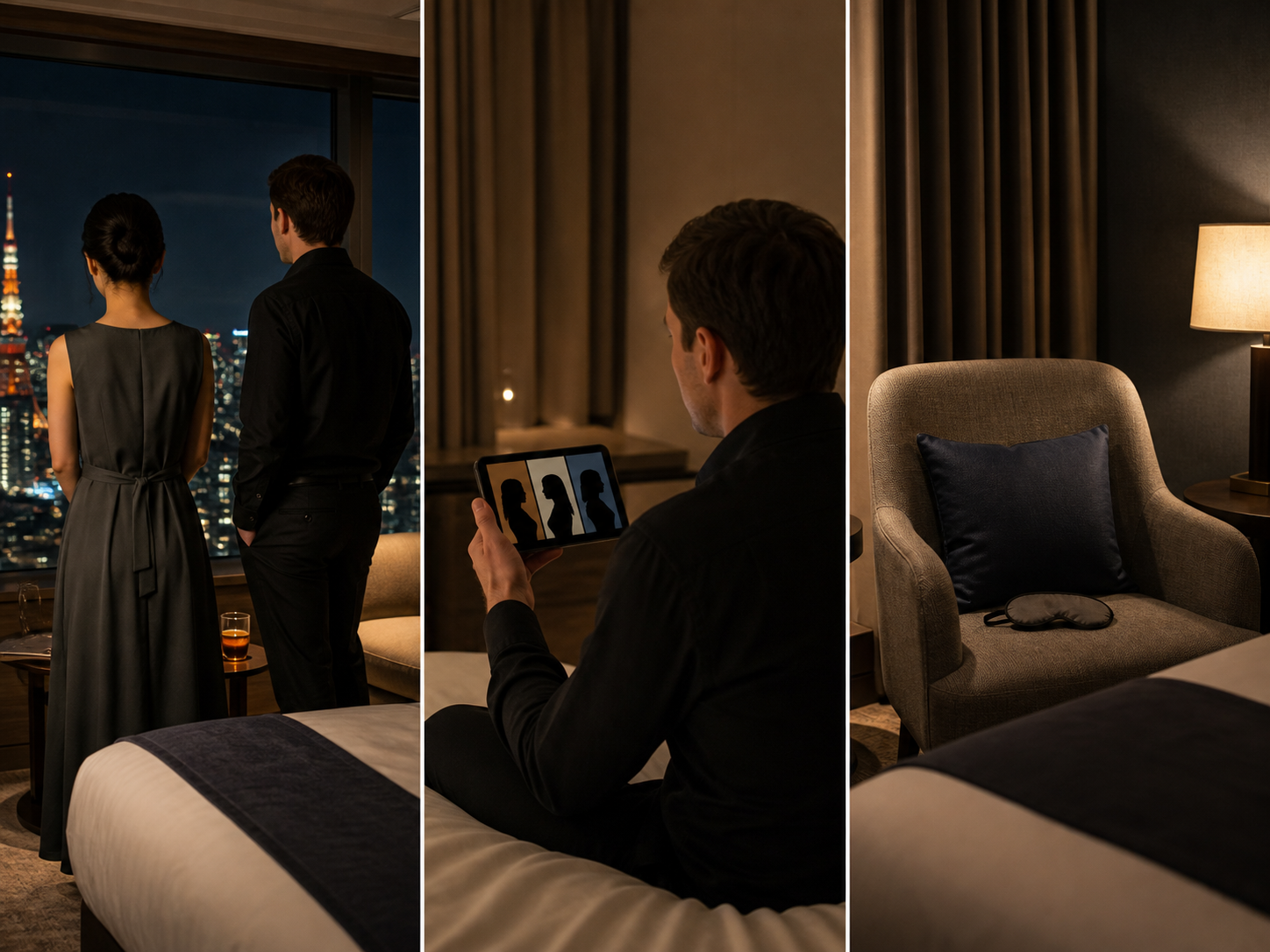
Continuity can be attractive because you do not have to begin the selection process from zero. Variety can be equally appropriate when you want a different atmosphere or when the first companion is unavailable. Rest may be the best choice after a demanding day. Treating all three as valid protects the stay from becoming a sequence of obligations.
This is also why a rigid seven-night itinerary would be misleading. The deciding facts are not the number of nights on the reservation. They are your available windows, the current roster, the companion’s schedule, the location, and how much time you genuinely want to set aside.
When Honshimei Fits a Long Stay
If you decide that you would like to meet the same companion again, the relevant term is honshimei (本指名), shown in English as a Repeat Request or repeat nomination. It applies when you request someone you have already met through MIRAI TOKYO. Choosing someone from a profile for the first time is photo selection, not honshimei.
The current published Repeat Request fee is ¥5,000. That is a separate line item from the course and any transportation fee. The amount does not purchase a promised emotional progression or a different set of boundaries. It identifies the booking as a request for the same person. Confirm the current fee and the complete total on the official pricing page before booking.
A repeat request can offer continuity: less time spent choosing again and a point of familiarity from the previous meeting. It does not guarantee that the companion is working on your remaining dates, that she can return to the same hotel, or that a second evening will unfold in a particular way. Her current schedule and the new booking details are checked again.
For the complete distinction between photo selection, repeat nomination, and other nomination paths, read the related guide:

Found a Favorite? Honshimei (Repeat Nomination) in Tokyo | MIRAI TOKYO
Found a companion you want to see again in Tokyo? Honshimei (本指名) is repeat nomination—how it works, why it helps, and how to request the same companion in English.
When you ask for honshimei during the same stay, identify the companion by her published profile name and mention the approximate date of the first booking. Then provide the new date, time, duration, and hotel. If she is unavailable, you can decide in advance whether you want the concierge to check a similar profile or whether you prefer to leave that evening open.
Send One Clear Long-Stay Request
A useful inquiry can handle both the immediate booking and the uncertainty of a longer stay without asking the concierge to plan every night for you. Keep the first request to the first booking. Mention your fallback date, but make clear that it is an alternative, not an additional reservation.
“Hello, I am staying in Tokyo from [arrival date] to [departure date]. I would like to request [companion name] for a [duration]-minute [rank] course at [hotel name and full address]. My preferred start is [date and time], and [second date and time] is an alternative. My second profile choice is [name]. Please confirm availability and send the full price breakdown, including nomination and transportation, before I book. Thank you.”
If you later make a repeat request, send a new message rather than treating the fallback date in the original inquiry as an automatic second booking. State that you met the companion on the first date and would like to request her again. This keeps consent, availability, location, duration, and price clear for the new appointment.
Hotel changes deserve special attention. Tokyo transportation fees are organized by ward on the published price table: Minato Ward is free, while other wards carry listed amounts, and areas outside the 23 wards or in nearby prefectures require consultation. If you move from one ward to another during the stay, give the full address attached to each requested date and ask the concierge to calculate that booking’s current transportation fee. Do not reuse the first night’s total.
If your schedule changes, contact the concierge before assuming the time can move. Companion availability, hotel logistics, and cancellation terms apply to the confirmed booking. The flexibility of a long stay helps you choose better dates; it does not make a confirmed reservation informal.
A Flexible Pattern for Several Tokyo Evenings
You do not need a day-by-day itinerary, but a simple sequence can protect both your energy and your options.
- Arrival or recovery evening: settle into the hotel, confirm your work calendar, and avoid building the plan around an uncertain landing time.
- First open evening: choose a format that fits the time available, then make one clearly defined booking.
- The following day: decide what you actually valued—the companion match, the social pace, the course length, or simply having a private evening without another trip across the city.
- A later open evening: consider honshimei for continuity, select a different profile or format, or keep the night unplanned.
- Before any second confirmation: resend the date, hotel, duration, request type, and ask for a new itemized total.
This pattern works whether the stay lasts five nights or several weeks because it is based on decisions, not a fixed calendar. It also leaves ordinary Tokyo evenings intact. A quiet meal, a walk, work in the room, and sleep are not empty spaces that need to be corrected. Private companionship is one option within the stay, and its value is easier to appreciate when it is chosen deliberately.
Frequently Asked Questions
Let the Stay Give You Better Information
The advantage of a long stay is not the number of evenings you can fill. It is the chance to make one clear choice, learn what suited you, and keep control of what comes next. Start with a format and duration that fit a genuinely open night. Choose a small profile shortlist, send the exact hotel and two possible dates, and confirm every fee before booking.
After the first evening, continuity through honshimei is available as a request—not a promise. A different companion or plan may fit the next night better, and rest may be the right answer. When every later booking is treated as a fresh decision, the stay remains flexible and the experience remains deliberate.
Plan the First Evening
Browse current profiles and choose two or three companions who fit the kind of evening you have in mind. Then use the booking guide to send your dates, duration, hotel, and request clearly.

This content is for informational purposes only and does not constitute legal advice. Companion availability, plan combinations, prices, transportation fees, hotel suitability, and booking conditions may change. Always confirm current terms and the complete written total directly with the MIRAI TOKYO concierge before booking.