











 MIRAI TOKYO concierge team
If you searched for “deriheru” and ended up wondering whether it is the same as a Tokyo hotel escort, the short answer is: same legal category, different design. Both are classified in Japan as non-storefront adult services (無店舗型性風俗特殊営業), but the way general deriheru operates and the way hotel-focused premium outcall operates diverges on almost every dimension that matters to a foreign hotel guest—privacy, pricing clarity, English communication, hotel etiquette, profile accuracy. This guide unpacks the legal layer, the industry jargon, and the structural gap between the two, so you can decide which actually fits a stay at a luxury hotel in Roppongi, Ginza, or Shinjuku.
Table of Contents
The Two Japanese Laws Behind Every Adult Service in Tokyo
Before comparing deriheru and hotel premium outcall, it helps to understand the two laws that shape every adult service in Japan. Almost every confusing aspect of Tokyo’s adult industry traces back to these two texts.
The Anti-Prostitution Act (1956)
Japan’s Anti-Prostitution Act was passed in May 1956 and took effect in April 1958. The key detail foreign visitors often miss is its narrow definition: it prohibits sexual intercourse (“coitus”) with an unspecified person in exchange for compensation. Other paid sexual acts—oral, bathing, massage with contact—fall outside that specific definition. The act also does not punish the act itself for either party; it targets solicitation, procurement, coercion, contracts for prostitution, and the provision of premises.
This narrow definition is why an entire legal adult industry exists in Japan. Services are designed around that line: what they provide is, by their framing, not “coitus with an unspecified person for compensation.” That legal framing is why soaplands, fashion health, deriheru, and hotel health all exist as licensed (or reported) businesses.
The Amusement Business Act (風営法 / Fūeihō)
The second law is the Act on Control and Improvement of Amusement Business (風俗営業等の規制及び業務の適正化等に関する法律), commonly called 風営法. It groups sex-adjacent businesses under the umbrella 性風俗関連特殊営業 (“sex-entertainment-related special business”) and divides them into four sub-categories:
- Storefront-type (店舗型性風俗特殊営業): Soapland, fashion health, private-room video, strip theaters, love hotels, adult product stores, and similar premises with a fixed venue.
- Non-storefront type (無店舗型性風俗特殊営業): Delivery health (deriheru) and dispatch-style fashion health variants—no walk-in venue, only a dispatch office.
- Video-transmission type (映像送信型性風俗特殊営業): Adult streaming/distribution.
- Telephone-introduction type (店舗型・無店舗型電話異性紹介営業): Telephone-based matching services.
All operators in these categories must file a notification with the Public Safety Commission of their prefecture—this is a notification system (届出), not a licensing system. Location is further restricted by the Building Standards Act: adult businesses cannot operate in most residential zones. In June 2025, a revision to the Act introduced significantly stiffer fines (up to ¥300 million for corporations) for operating unnotified sexual services, accelerating the trend toward transparency among legitimate providers.
Where Each Format Sits in the Legal Map
Once you understand the categories above, the most confusing Japanese-Western terminology sorts itself out quickly. Here is where each format a foreign guest typically encounters actually lives:
- Deriheru (delivery health): Non-storefront type. Dispatch to the client’s hotel or residence. No walk-in location; operators work from an office.
- Fashion health (ファッションヘルス): Storefront type. Clients visit a physical shop with private rooms.
- Hotel health (ホテヘル): Mostly a deriheru sub-format in practice—reception in a small office near a love hotel district, then meet-up in a love hotel nearby. Some operate as storefront type.
- Soapland (ソープランド): Storefront type, operated under the legal framing of a bath business.
- Imekura (image club, イメクラ): Storefront type, specializing in cosplay-and-scenario play.
- Men’s esthetic (メンズエステ): Generally marketed outside the adult-notification categories as a relaxation/esthetic service. Once actual services cross into sexual-service territory, legal risk rises sharply, and the 2025 revision made that more consequential.
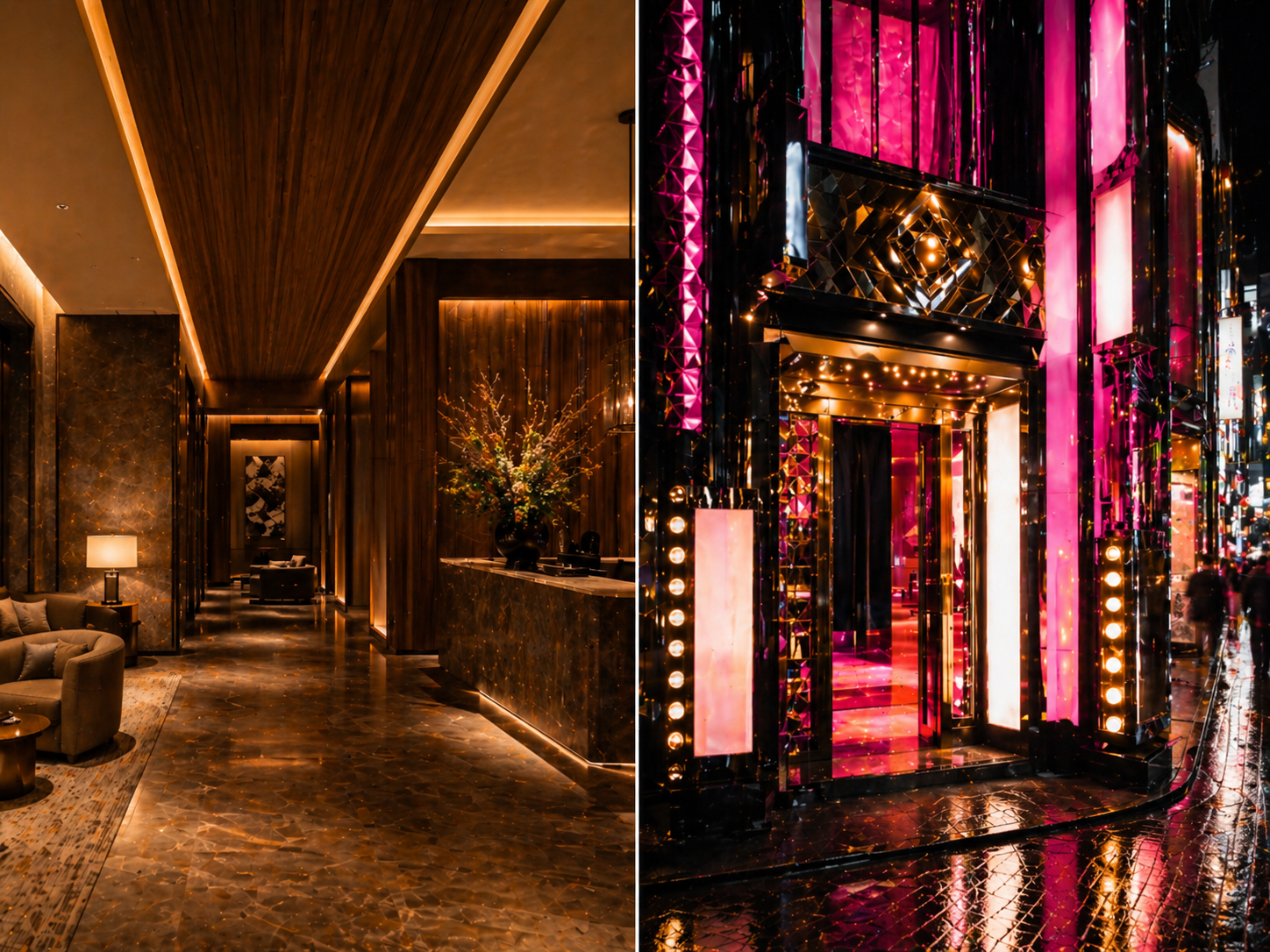
A premium hotel-focused outcall service—such as MIRAI TOKYO—sits in the non-storefront category, the same box as general deriheru. That shared legal position is where the similarity ends.

What is Delivery Health (Deriheru) in Tokyo? The Risks to Know, and the Safer, Professional Alternat
Learn what “Delivery Health (Deriheru)” in Tokyo really means, the hidden risks around quality, hygiene, privacy and pricing, and how to choose a safer, professional outcall alternative as an international traveler.
Why Hotel Premium Outcall Is Built Differently
Legal category is the category; service design is where every meaningful difference lives. General deriheru and hotel-focused premium outcall optimize for different things.
General deriheru: high-volume dispatch
General deriheru is usually a volume business. The service model favors shorter courses, quick dispatch, exposure through large directory platforms such as City Heaven, and a panel-based selection experience where the customer picks from photographs. It works. It is also not calibrated for a foreign guest checking into a luxury hotel in Roppongi and asking for a discreet, English-speaking experience.
Hotel premium outcall: hotel-first design
Hotel-focused premium outcall is the same legal category with a different design brief. Sessions are longer (commonly 90 to 180 minutes). Companion profiles are verified and photographed in-house. Pricing is published in total, not just “from ¥XX.” Communication channels are built for non-Japanese speakers. The dispatch base sits inside or adjacent to the hotel corridors where guests actually stay—Roppongi, Akasaka, Ginza, Shinjuku.
None of that is required by the law. All of it is chosen because it is what a foreign hotel guest actually needs. Legal category is shared; the design brief is inverted.
Discretion as a structural feature, not a promise
Luxury hotels in central Tokyo have lobbies and elevator corridors that do not forgive obvious adult-industry traffic. That is why hotel premium outcall treats discreet arrival as a design feature: staggered timing, careful dress, awareness of hotel rules, understanding which properties in which wards actually have rooms suited to the booking. General deriheru is not wrong to skip this; it just doesn’t need it for its market.
Insider Terms Foreign Guests Meet Online
Once you start reading Japanese adult-service listings—whether in Japanese or through partial English translations—you run into insider terminology. Most of it is not documented in any English glossary. Here is the minimum set to read a Tokyo deriheru listing intelligently:
Nomination fees
- 写真指名 / パネル指名 (shashin shimei / panel shimei): Photo nomination. You pick a specific companion from her photo. At MIRAI TOKYO, this fee is listed publicly at ¥2,000.
- 本指名 (honshimei): Repeat nomination. You request a companion you have seen before. At MIRAI TOKYO, repeat requests are listed publicly at ¥5,000.
- フリー (free): Not “free of charge.” It means the shop selects the companion for you. The course price is the same; only the nomination fee is waived. Confusing this is the single most common mistake English-speaking readers make on Japanese listings.
Photo and profile handling
- パネマジ (panemaji / panel magic): Aggressive editing of a companion’s photo on the “panel” (the shop’s selection display). The resulting mismatch between photo and person is the number-one complaint category in the general deriheru market, and a specific reason to prefer services that take their own verified photographs.
- 即姫 (sokuhime): “Immediate companion.” Indicates a companion currently on standby and available. It is a display state on advertising sites like City Heaven, not a guaranteed dispatch. At busy hours, a sokuhime marker can actually be a mild negative signal.
Terms you should recognize but avoid
- NS / NN: Insider slang for unprotected services (NS = “no skin,” NN = ejaculation without a condom). These terms sit firmly in the illegal or high-risk end of the spectrum and are not associated with legitimate premium operators. If a listing leans on NS / NN as a selling point, it is flagging legal and health risk, not premium service.
- “Free option” / “all inclusive”: Sometimes genuine, often ambiguous. Treat any “all inclusive” advertisement as a cue to ask for a written total before booking.
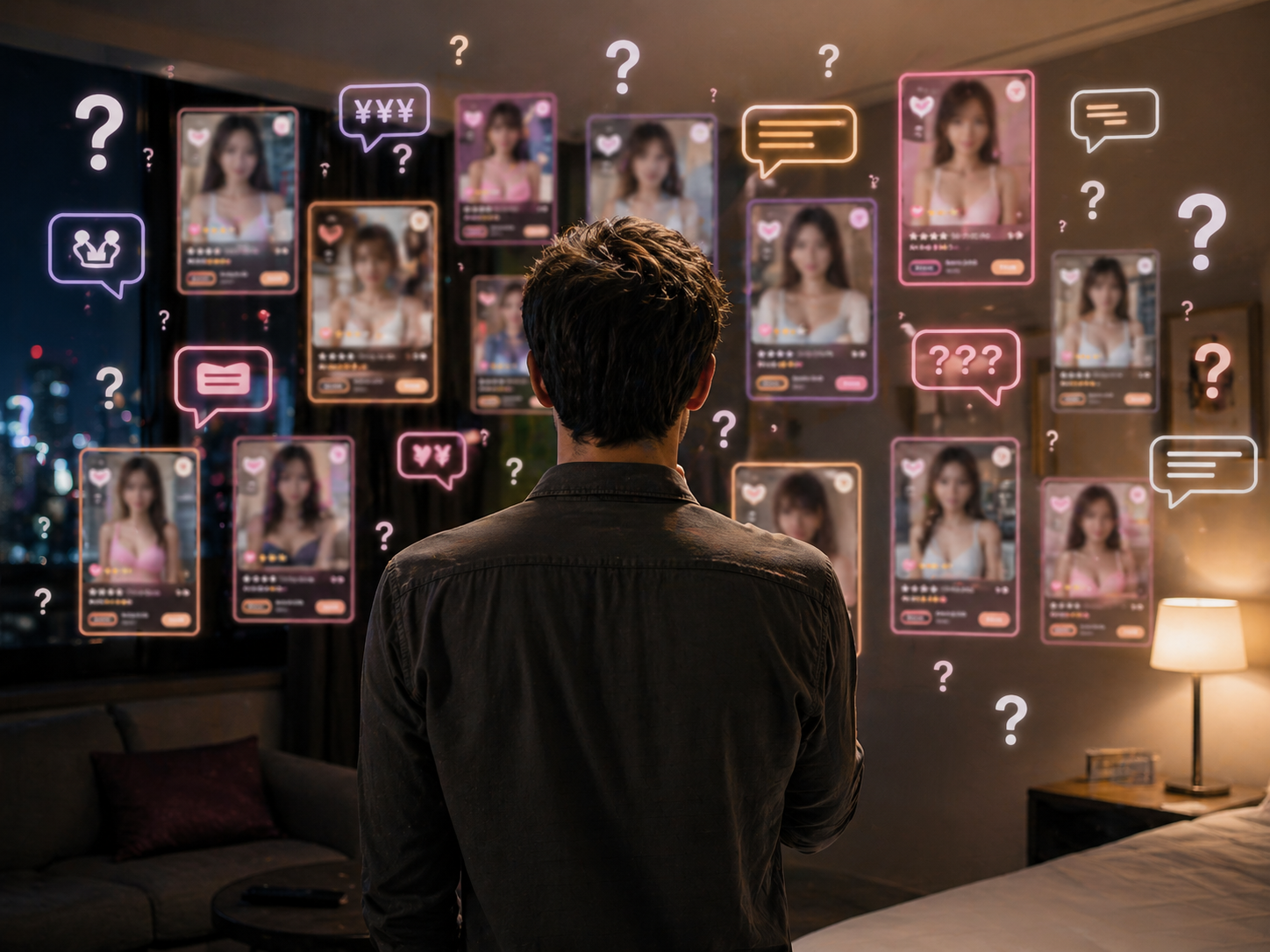
Foreign Guest Concerns and the Structural Answer
Translate the deriheru market’s common complaints into a foreign hotel guest’s specific worries, and the list is short. Each one has a structural answer—not a promise, a design choice.
“Will the person who arrives match the photos?”
The panemaji problem. The structural answer is profile presentation treated as part of the service design, together with published rank-based pricing that reduces mismatch incentives. Premium operators try to make the profile page legible before contact rather than after arrival.
“Will the final price match the advertised price?”
The “from ¥XX” problem. The structural answer is a published pricing page with course fee, rank, nomination, transportation, extension ranges, and cancellation policy visible in advance. A premium operator has every incentive to publish these because transparency itself is the differentiator.
“Will I be understood in English—before, during, and after?”
The language-gap problem. The structural answer is English support not only on the website, but through multiple live channels (LINE, WhatsApp, WeChat, Instagram, KakaoTalk, web form). A general deriheru shop rarely needs this; a hotel-focused premium operator cannot function without it.
“Will I be noticed in the lobby?”
The hotel-etiquette problem. The structural answer is an operator that actively thinks about how a companion enters a luxury property: staggered timing, dress code appropriate for the hotel in question, avoiding house phones, knowing which hotels in which wards tolerate which arrival patterns. This is operational discipline, not a slogan.
“What happens if something goes wrong?”
The recourse problem. General deriheru’s customer-support surface is often thin. A premium operator makes contact channels, cancellation rules, and booking policy visible before the session. It is a small thing until you need it.
Transparent Pricing & Rates - 3 Tiers | MIRAI TOKYO
Transparent pricing for Tokyo luxury escort service: Silver (¥37,000-¥85,000), Gold (¥45,000-¥105,000), Diamond (¥70,000-¥170,000). Time-based sessions from 60-180 minutes. No hidden fees. Free transportation within Roppongi area. English payment assistance available.
How MIRAI TOKYO Is Structured for Hotel Guests
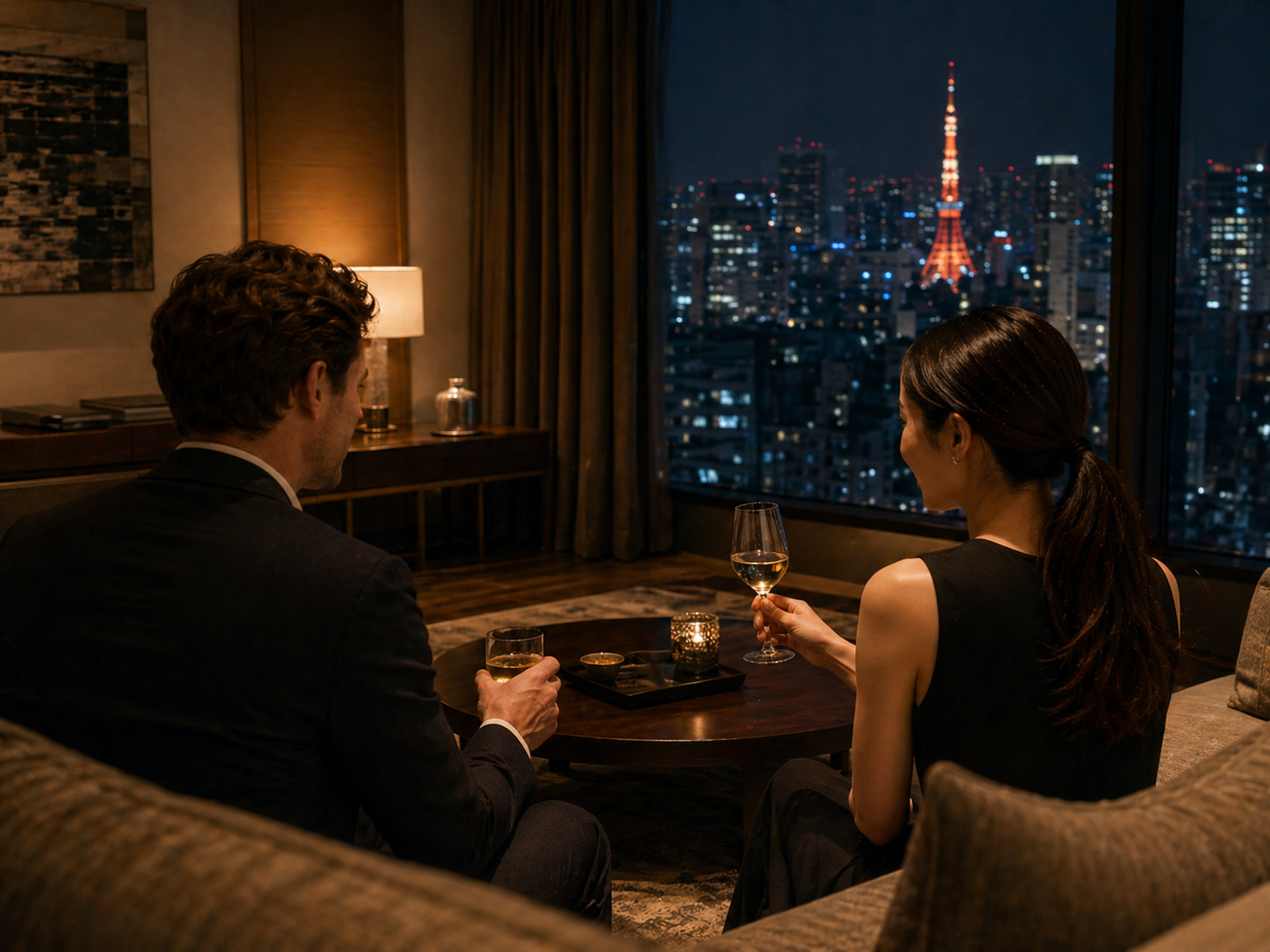
MIRAI TOKYO is, by its legal classification, a non-storefront sex-entertainment-related special business—the same category as general deriheru. Its design, however, is calibrated for international visitors staying at luxury hotels in central Tokyo.
The structural pieces are visible on the public site:
- Rank-based, published pricing: SILVER (¥37,000–¥85,000 for 60–180 minutes), GOLD (¥45,000–¥105,000), PLATINUM (¥57,000–¥138,000), DIAMOND (¥70,000–¥170,000), with a non-public ASK tier.
- Transparent fee items: Photo selection ¥2,000, repeat nomination ¥5,000, 30-minute extensions by rank, transportation free within Minato Ward and tiered beyond.
- No membership fee: Joining is free.
- Business hours 10:00 to 6:00 (next day): Covers late business dinners, post-flight timing, and central-Tokyo nightlife hours.
- Advance booking recommended 2 to 3 hours ahead: Same-night requests are considered when schedules allow.
- Multi-language contact: LINE, WhatsApp, WeChat, Instagram, KakaoTalk, and a web form.
- Published rules: The public “How to Use” page lists what is not accepted (no minors, no full service, no photography, no drugs, no intoxicated clients, no STIs, no violence, no multiple persons)—transparency as a design feature, not fine print.
Booking Guide - 4 Easy Steps | MIRAI TOKYO
Complete guide to booking luxury escort service in Tokyo: 4-step process from inquiry to arrival. Available via phone, LINE, WeChat, WhatsApp. English support, discreet service, legal compliance explained. Learn about Japan's outcall escort culture and regulations.
Seen against the general deriheru market, MIRAI TOKYO is not trying to compete on volume or headline price. It is trying to answer the five concerns above with a structure that a foreign hotel guest can read and verify before contact. That shape—non-storefront, hotel-focused, English-first, published-fee—is what “hotel premium outcall” means in practice.
FAQ
Hotel-Based Premium Outcall in Central Tokyo
MIRAI TOKYO is a non-storefront premium outcall operator serving luxury hotels across Roppongi, Akasaka, Ginza, Shinjuku, and central Tokyo. English support across every contact channel. Published total pricing. Verified companion profiles.
 How to Book
Last Updated: 2026-04-25
This content is for informational purposes only and does not constitute legal advice. It describes Japanese adult-industry classifications and includes information about adult companion services. Readers should verify current regulations and individual operator policies before engaging any service.