











 MIRAI TOKYO concierge team
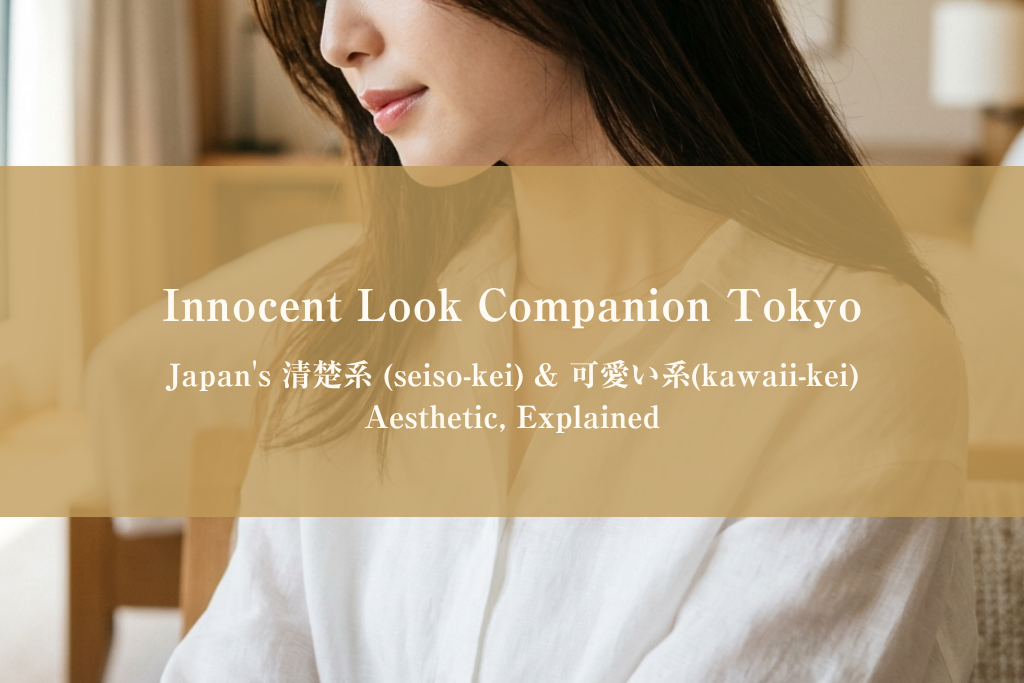
If you search for a “cute” or “innocent” companion in Tokyo, you are most likely looking for what Japanese profiles call 清楚系 (seiso-kei) or 可愛い系 (kawaii-kei). These are style labels, and knowing how to read them turns a vague search into something you can actually act on. This guide explains what separates the two, what to look for in profile photos, and how to describe what you want when you contact a booking team.
Table of Contents
Seiso-kei vs. Kawaii-kei: What Separates Them
Both labels describe a soft, polished look, but they land differently. Understanding the gap helps you pick the right profile and phrase your request clearly.
清楚系 (seiso-kei)
The word 清楚 means clean, neat, and restrained. In a profile context it usually means: light or no-foundation-visible makeup, simple hair styling, clothes that read as everyday-polished rather than dressed-up. A blouse, a plain knit, a clean dress. The overall impression is composed. There is no visible effort to look dramatic or to signal a nightlife setting. This is what many overseas visitors are reaching for when they type “natural look” or “girl-next-door.”
可愛い系 (kawaii-kei)
可愛い simply means cute, but in the context of profiles it leans warmer and more openly sweet than seiso-kei. The styling is still light, but the expression is more playful. You might see softer colors, rounder styling, and a smile that reads as warm rather than composed. If seiso-kei is a calm afternoon in a Ginza café, kawaii-kei is closer to a Shimokitazawa afternoon — still relaxed, but with more personality showing.
Adjacent labels you will see
A few related labels sometimes appear alongside or instead of seiso and kawaii. They are worth recognizing:
- 癒し系 (iyashi-kei): Soothing, gentle, slow-paced energy. Often overlaps with both seiso and kawaii but puts the emphasis on calm and comfort rather than polish or cuteness.
- お嬢様系 (ojousama-kei): More ladylike and refined. Cleaner than kawaii, more elevated than seiso. Think structured clothing and deliberate styling.
- ナチュラル系 (natural-kei): Minimal makeup, understated outfit, a look that does not read as carefully assembled. Close to seiso but less concerned with elegance.
Labels overlap and different services use them inconsistently. Treat them as a starting direction, then verify against the photos.
How to Read a Profile for This Category
On most premium outcall sites in Tokyo, each companion page includes several photos and a short text description. For seiso-kei and kawaii-kei, the photos carry more information than the label.
What to look at in the photos
Start with the face and makeup. Seiso-kei profiles usually show skin with visible texture — foundation that looks like skin, not like coverage. Lip color is often neutral or barely-there. Eye makeup is defined but not theatrical. Kawaii-kei may show slightly more color, a brighter expression, and softer, rounder styling. What both have in common: neither should read as nightclub or hostess styling, which tends toward heavier contouring, darker lips, and a more deliberately glamorous pose.
Then look at the outfit. A blouse or knit over simple trousers, a plain dress, a casual coat — these are consistent signals. Sequins, deep V-cuts, and heavily fitted bodycon are more likely to appear in “sexy-kei” or “gyaru-kei” profiles. They can coexist on the same person in different photos, so pay attention to the photos used as the main profile shot rather than the more editorial ones lower on the page.
Finally, check whether the photos look current. Heavily filtered or professionally retouched images in a style that looks several years old are a sign that the photos may not reflect the current look. Real-world lighting, consistent face across multiple shots, and recent-looking hair styling are worth more than studio-quality images that do not hold together as a set.

When the label and the photos disagree
Trust the photos. A profile tagged “清楚系” that shows heavy contouring and a nightlife backdrop is telling you the label was added for searchability. Conversely, a profile without a seiso label that shows tidy hair, natural makeup, and a blouse may be exactly what you are looking for. Read the photos first, use the label as a rough filter.
Tokyo Nightlife Scams: How to Avoid Bottakuri & Find an Outcall ServiceYou Can Actually Trust
Tokyo nightlife scams explained: avoid bottakuri in Shinjuku and Roppongi and choose a safe, transparent, English-speaking hotel outcall service you can trust.
What to Say When You Book
Japanese booking staff at premium outcall services are generally comfortable with style-based requests. The friction usually comes from vague vocabulary, not from the request itself. Here is how to make the conversation practical.
The exchange that tends to work
A typical effective message runs something like this: “I’m looking for a soft, natural look — light makeup, calm styling, not flashy. Do you have someone available tonight who fits that? I like this profile [link or name], but if she is not available, someone with a similar feel would be fine.” That gives the team a style brief and a concrete reference point. They can then check availability and either confirm the person or suggest the closest alternative in that session’s lineup.
If you do not have a profile reference yet, describing the mood still helps more than using only a single keyword. “Natural and clean” is more useful than “innocent,” because the latter does not translate directly into the style vocabulary the booking team uses internally.
Phrasing that often causes confusion
- Requesting by age rather than by look. Age is not a style category, and well-run services will redirect you to style-based filtering.
- Sending a celebrity photo or anime character reference. Booking teams work from their own current profiles, not external images.
- Using “innocent” as the only descriptor. It means different things to different people and does not map to a recognized style label in Japanese.
- Asking “who is the cutest” without more detail. The team cannot know which direction of cute you mean without a style reference.
The cultural context, briefly
Seiso-kei and kawaii-kei are not terms invented for companion services. They come from fashion media, idol culture, and beauty coverage that has been consistent in Japan for decades. The same terms appear in magazine style guides, streaming platform profiles, and social media. That is why booking staff respond to them quickly — the vocabulary is already shared. You do not need to explain it; you just need to use it, or describe the look in a way that maps to it.

Finding This Type at MIRAI TOKYO
MIRAI TOKYO’s website is built for international clients — the site is in English, and contact options include LINE, WhatsApp, WeChat, KakaoTalk, and phone. Profiles are browseable before you commit to anything. That browsing step matters for a look-based search: you can form a concrete preference from the photos before contacting the team, which makes the subsequent conversation faster.
The booking flow for a style-based request at MIRAI TOKYO typically runs like this. You open the Companion page and go through the current profiles. You note the names or IDs of anyone who fits the seiso-kei or kawaii-kei direction you want — one or two backups are worth keeping in case your first choice is unavailable. You then contact the team with your preferred date, time, and a brief style description that references the specific profiles you noted. The team confirms availability and walks you through the total cost before you finalize.
On pricing: the base course starts at ¥37,000. That figure is posted publicly, but the total will include additional items depending on your booking — transportation, photo selection fees, and any repeat request charges are posted separately and should be confirmed with the team before you commit. The service operates within Japanese legal boundaries, and terms are explained on the site’s How to Use page.
For this category specifically, MIRAI TOKYO’s profile browsing is useful because you are making a judgment based on photos, not relying on a label match. The team can also tell you which profiles in the current lineup lean seiso versus kawaii — asking that question directly before booking is a reasonable thing to do.
Booking Guide - 4 Easy Steps | MIRAI TOKYO
Complete guide to booking luxury escort service in Tokyo: 4-step process from inquiry to arrival. Available via phone, LINE, WeChat, WhatsApp. English support, discreet service, legal compliance explained. Learn about Japan's outcall escort culture and regulations.
FAQ
Before You Book: A Quick Checklist
Use this as a final check before you contact a booking team or commit to a booking.
- You have looked at photos, not just the style label. The photos match the direction you want.
- You have noted at least two profiles — a first choice and one backup — in case availability changes.
- You can describe what you want in a sentence: the styling, the mood, what you are not looking for.
- You have checked the pricing page and know what the base cost is. You plan to confirm the total — including transportation and any selection fees — with the team before finalizing.
- If you are unsure between seiso-kei and kawaii-kei, you are ready to ask the booking team directly which direction the available profiles lean today.
A style-based booking in Tokyo is more straightforward than it sounds. The vocabulary exists, the services are set up to handle it, and most of the friction comes from under-specifying the request. Photos first, clear description second, total cost confirmed third.
Looking for a Seiso or Kawaii Look in Tokyo?
Browse MIRAI TOKYO’s profiles, note the ones that fit, and contact the booking team with a brief style description. English contact options are available, and the team can tell you what is in the current lineup before you commit.
About This Guide
This guide was written to help overseas visitors translate style search terms — “cute,” “innocent,” “natural” — into the specific Japanese vocabulary used on Tokyo companion profiles and booking pages. It focuses on how to read profiles and communicate a style preference clearly.