











 MIRAI TOKYO concierge team

In Tokyo, service coverage isn’t just about which neighborhoods are listed—it’s about whether arrival can actually be handled smoothly. Share your exact hotel (not just the area), confirm an all-inclusive quote that reflects distance, build in a realistic buffer, and check late-night transport after the last train so the booking stays calm, discreet, and on schedule.
Table of Contents
Introduction: Why “Where” Matters as Much as “Who”
When searching for an English-speaking escort in Tokyo, many travelers focus first on profiles. But in a city as large and layered as Tokyo, logistics often determine how the night actually unfolds. Travel time, hotel policies, and late-night access can matter just as much as who you book.
Tokyo isn’t one uniform area—it’s a collection of very different districts. A service that simply claims to cover “Tokyo” without explaining timing, hotel coordination, or after-midnight realities may be glossing over important operational details.
This guide reframes coverage as arrival certainty, helping you avoid unexpected delays and location-related friction.
Start here: English-Speaking Escort Service in Tokyo: What Happens When You Reach Out
Deconstructing Coverage: Think in Time, Not Just Maps
In professional hospitality, “service area” really means predictable arrival. These three zone types help set realistic expectations.
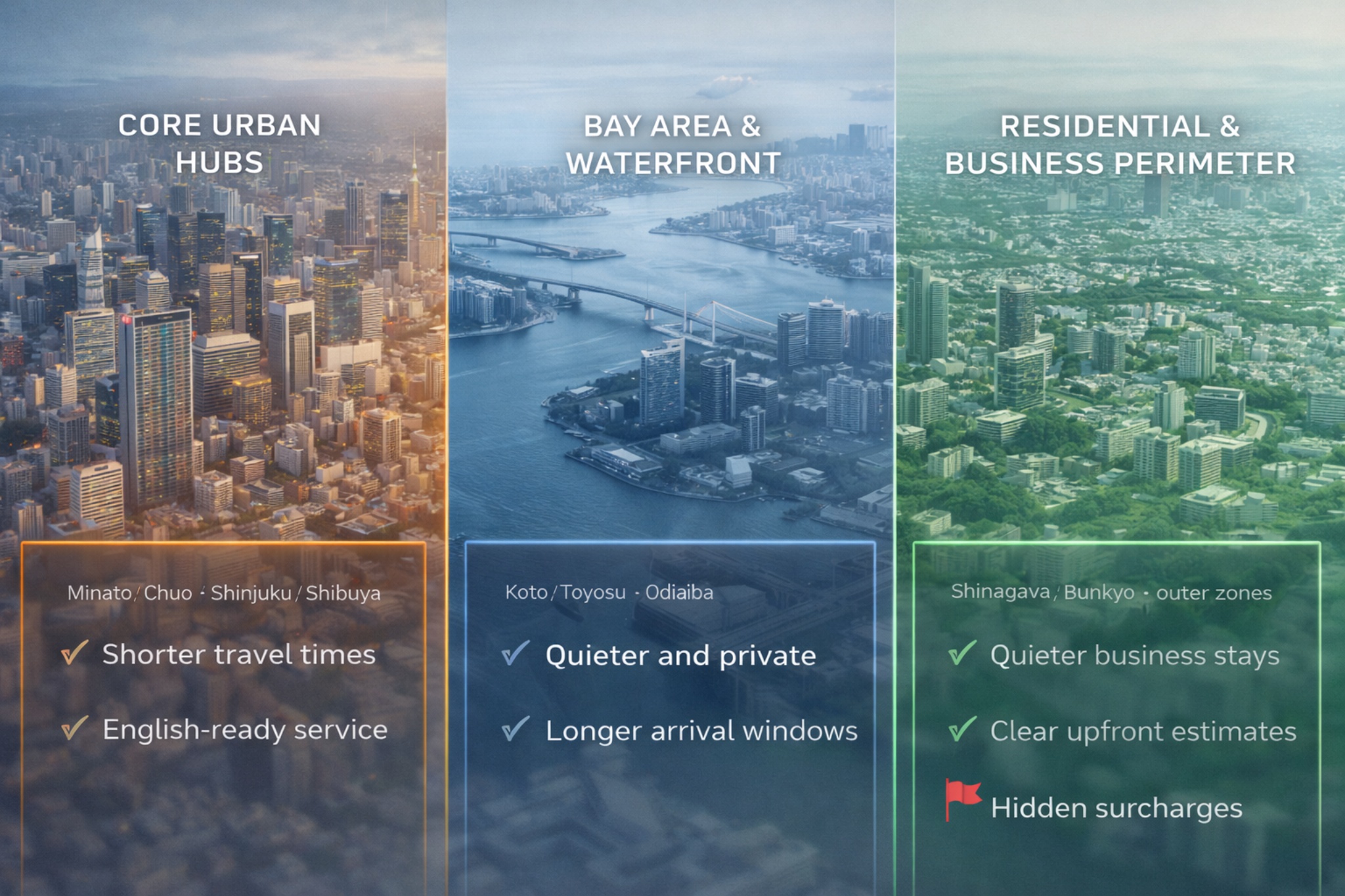
I. Core urban hubs (Minato / Chuo / Shinjuku / Shibuya)
This is the heart of Tokyo’s luxury hotel scene—areas like Roppongi, Ginza, Shinjuku, and Shibuya. Many higher-end services base their operations close to these districts.
- Advantage: Shorter travel times and easier access to English-ready coordination.
- Professional standard: Even in central areas, a well-run service plans for discreet entry—lobby movement, security checks, and low-visibility timing.
II. Bay area & waterfront (Minato-south / Koto / Toyosu / Odaiba)
Waterfront hotels often feel quieter and more private, but they can be further from central transport routes.
- Advantage: A sense of separation from the busiest nightlife zones.
- Professional standard: Expect slightly longer arrival windows and estimates that reflect real late-night road conditions.
III. Residential & business perimeter (Shinagawa / Bunkyo / outer zones)
These areas are popular for quieter business stays, but they may sit further from typical dispatch hubs.
- Professional standard: Transportation costs and timing are explained clearly and included or quoted upfront.
- Red flag: Location used later as justification for surprise surcharges.
The Hotel Factor: Why Location Changes the Experience
In Tokyo, hotel environments vary more than many visitors expect. A professional service doesn’t treat your hotel as just an address—it treats it as part of the discretion strategy.
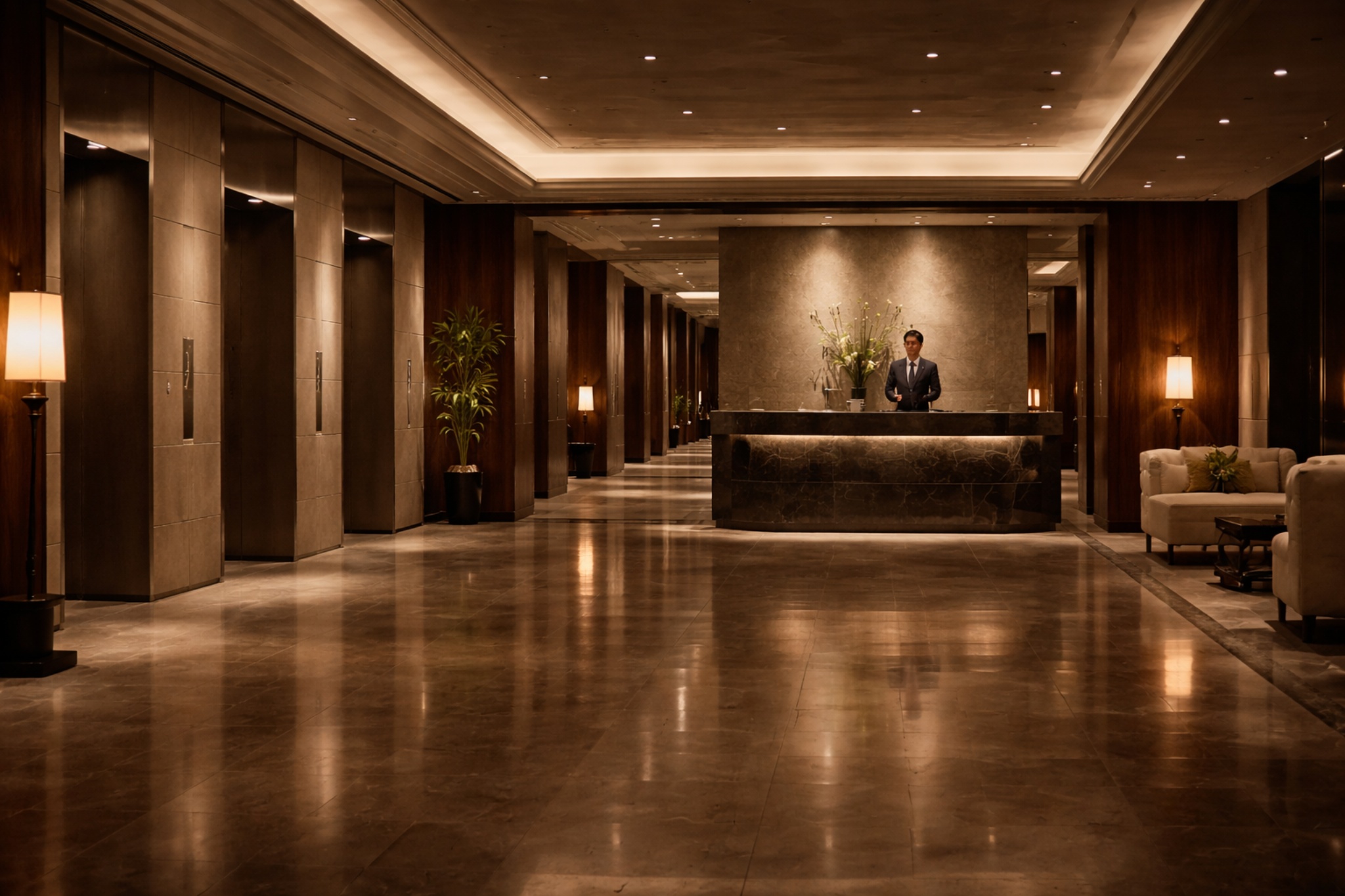
Luxury hotels (higher security, higher visibility)
Many five-star properties have stricter visitor expectations and security routines. Smooth coordination depends on calm timing, guest-appropriate presentation, and low-friction entry.
Boutique & business hotels (tight spaces, strict rules)
Smaller lobbies and stricter visitor policies can make arrivals feel more exposed. Sharing the hotel name early allows for advice on the most discreet approach.
Discretion is logistical
If your hotel has higher security, a professional service plans the arrival in advance rather than improvising at the front desk.
How to Request Coverage Like a Pro (3 Details)
Clear information upfront helps protect both timing and privacy. Use this approach when you inquire.
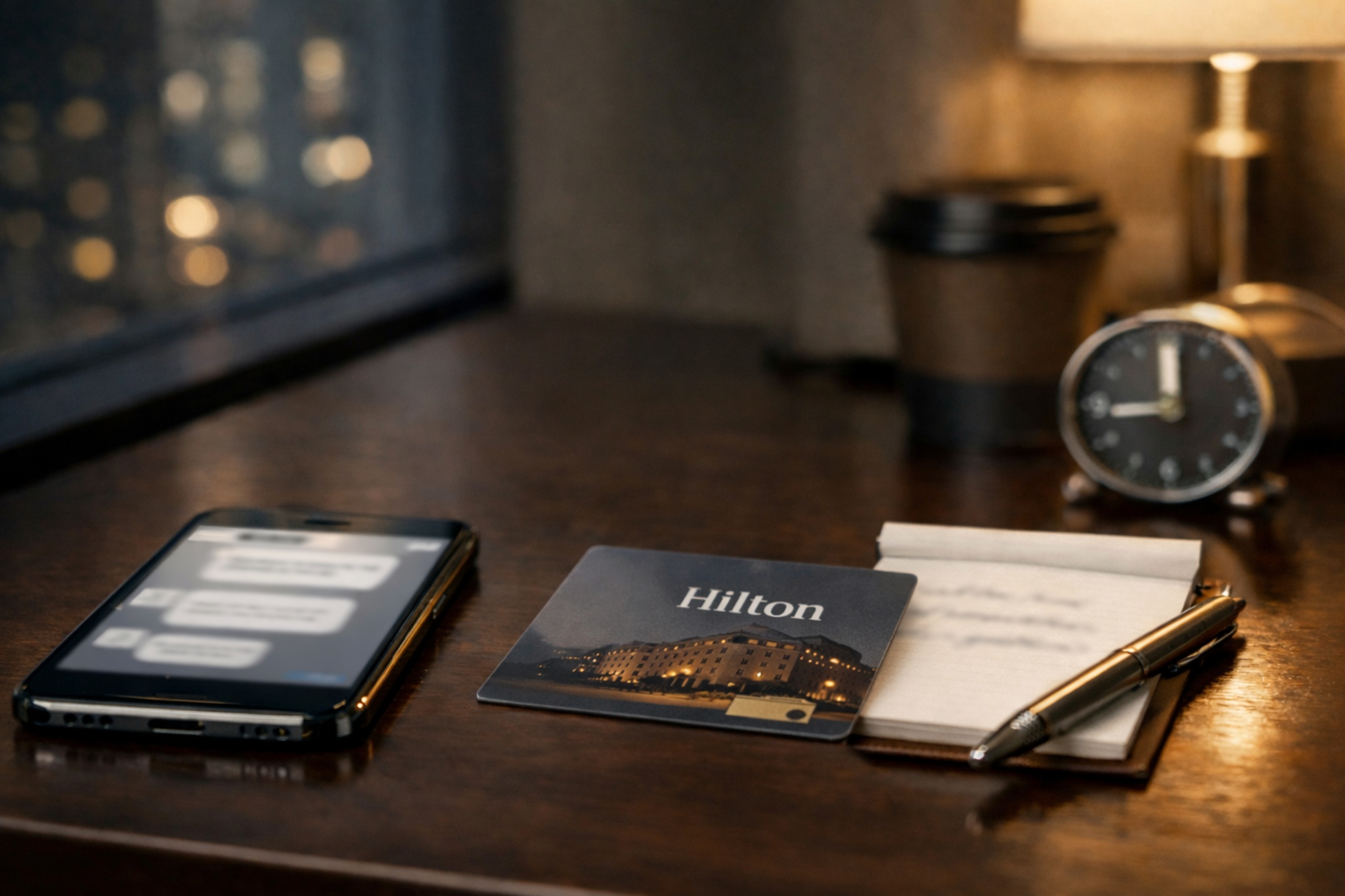
1) Share the exact hotel name (not only the area)
Saying “Shinjuku” is vague. Providing the hotel name allows for realistic travel estimates and hotel-aware coordination.
2) Share your buffer window (and your hard stop)
If you have dinner plans, meetings, or a flight the next morning, say so. A professional service will be honest if the timing doesn’t work.
3) Confirm late-night feasibility (transport after the last train)
Trains stop around midnight. For after-hours bookings, confirm that safe transportation and stable late-night communication are available.
FAQ
Conclusion
The real luxury of a high-end service isn’t just companionship—it’s the absence of logistical stress. In Tokyo, that means understanding timing, hotel environments, and late-night transport realities.
Invest in certainty, not just a map: confirm arrival windows, written pricing, and hotel-aware coordination so your night stays calm, smooth, and discreet.
Confirm Your Location & Timing
If you want discreet, predictable coordination with clear English communication, our concierge team can confirm coverage and timing based on your hotel and schedule.
About This Guide
This guide was prepared and reviewed by a concierge team experienced in supporting international visitors in Tokyo. It outlines coverage planning, hotel-aware coordination, and timing checks to reduce location-based friction. Reference: Booking Guide – Service Process.